Concept dictionary
Total Cost of Ownership
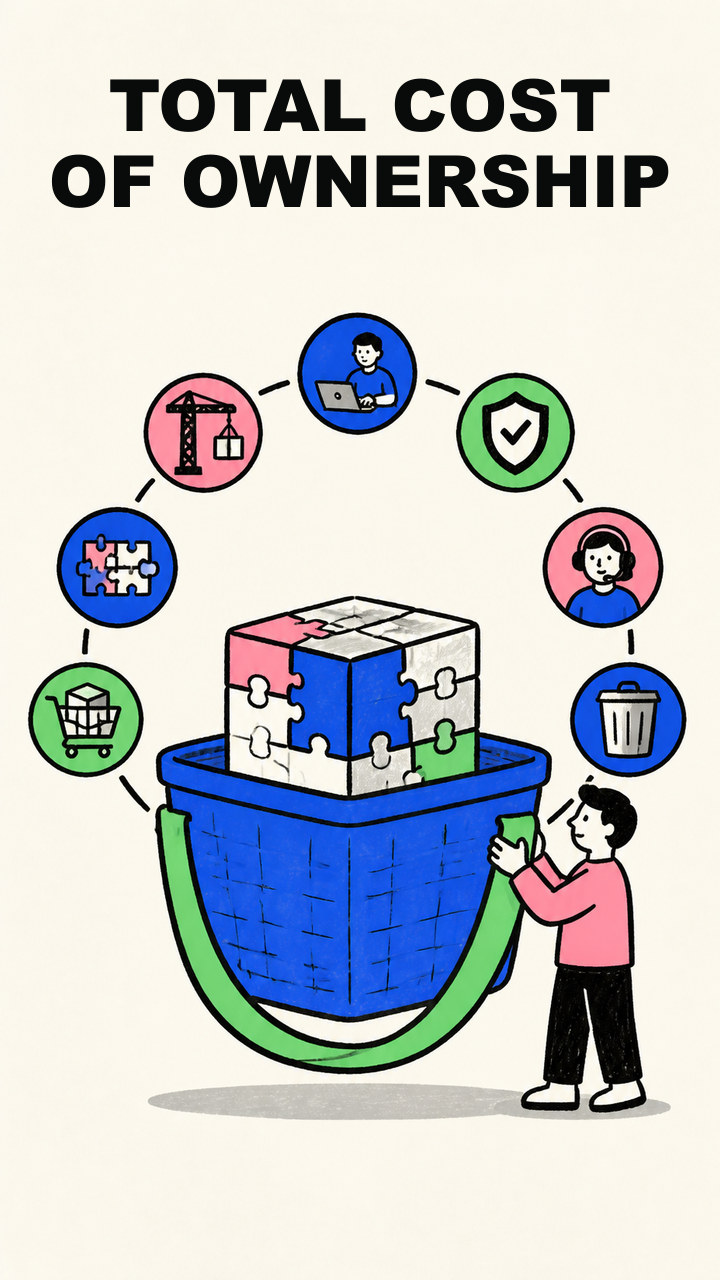
Total cost of ownership is the full expected cost of acquiring, integrating, operating, governing, supporting, changing, and eventually retiring a system over its useful life.
- Review state
- Reviewed in POC
- Freshness
- Current
- Version
- 2
Also called
- Total Cost of Ownership
- TCO
Remember it this wayThe price gets the system; TCO keeps and eventually changes it.
In plain language
For AI, the cost may include licenses, usage, data work, integration, review time, evaluation, security, monitoring, training, rework, vendor management, and exit or migration.
Why it matters
A low initial price can hide recurring and organizational costs. Comparing options requires a common period, workload, service level, and risk assumption.
Example
A company compares two assistants using three years of licenses, API usage, integration, employee review, monitoring, support, retraining, and migration costs.
Common misconception
TCO is not a single universal number. It depends on scope, usage, uncertainty, and which costs or risks the analysis includes.
Related terms
Sources
- U.S. Government Accountability Office, Cost Estimating and Assessment Guideauthoritative guidance on life-cycle cost estimates and costs beyond initial acquisition.
Learn more
- Use [[larger-business-context|Larger Business Context]] to decide which lifecycle costs belong in the comparison.