Concept dictionary
Vendor Lock-In
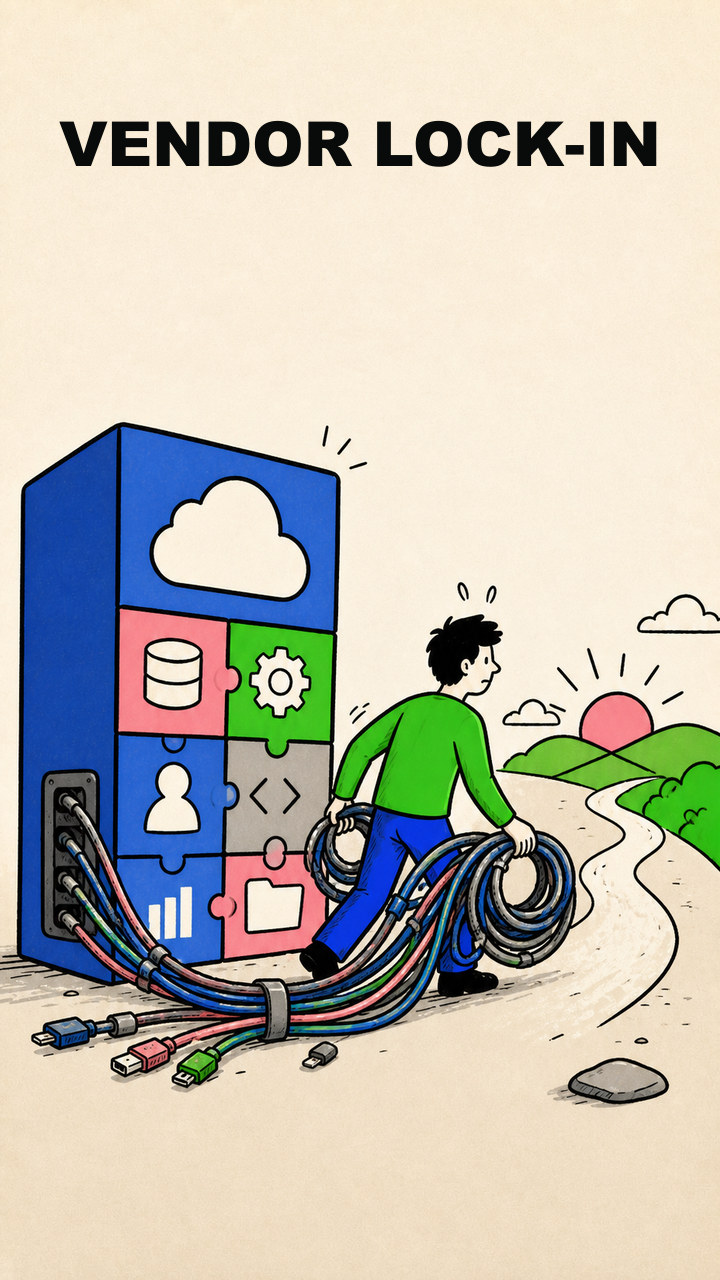
Vendor lock-in is a condition in which switching from a provider becomes costly, risky, slow, or impractical because important technology, data, skills, contracts, or workflows depend on that provider.
- Review state
- Reviewed in POC
- Freshness
- Current
- Version
- 2
Also called
- Vendor Lock-In
- Vendor Lock In
Remember it this wayAdoption cost gets you in; switching cost determines how easily you get out.
In plain language
A service may be easy to adopt but hard to leave. Custom interfaces, proprietary formats, model behavior, accumulated data, employee habits, and contract terms can all raise exit costs.
Why it matters
Lock-in changes negotiating power, resilience, future design choices, and the consequences of price, policy, service, or ownership changes.
Example
A company cannot move its AI workflow without rewriting integrations, rebuilding evaluations, converting stored data, and retraining staff around different model behavior.
Common misconception
Vendor lock-in is not automatically bad or avoidable. The decision is whether the dependency is understood, proportionate, and supported by practical exit options.
Related terms
Sources
- NIST SP 800-146, Cloud Computing Synopsis and Recommendationsofficial guidance discussing interoperability, portability, migration, and dependency considerations when selecting cloud services.
- NIST SP 800-145, The NIST Definition of Cloud Computingofficial baseline for the cloud service and deployment models in which portability and provider dependence must be evaluated.
Learn more
- Assess the dependency by layer with [[layered-sovereignty|Layered Sovereignty]].