Concept dictionary
Build vs. Buy
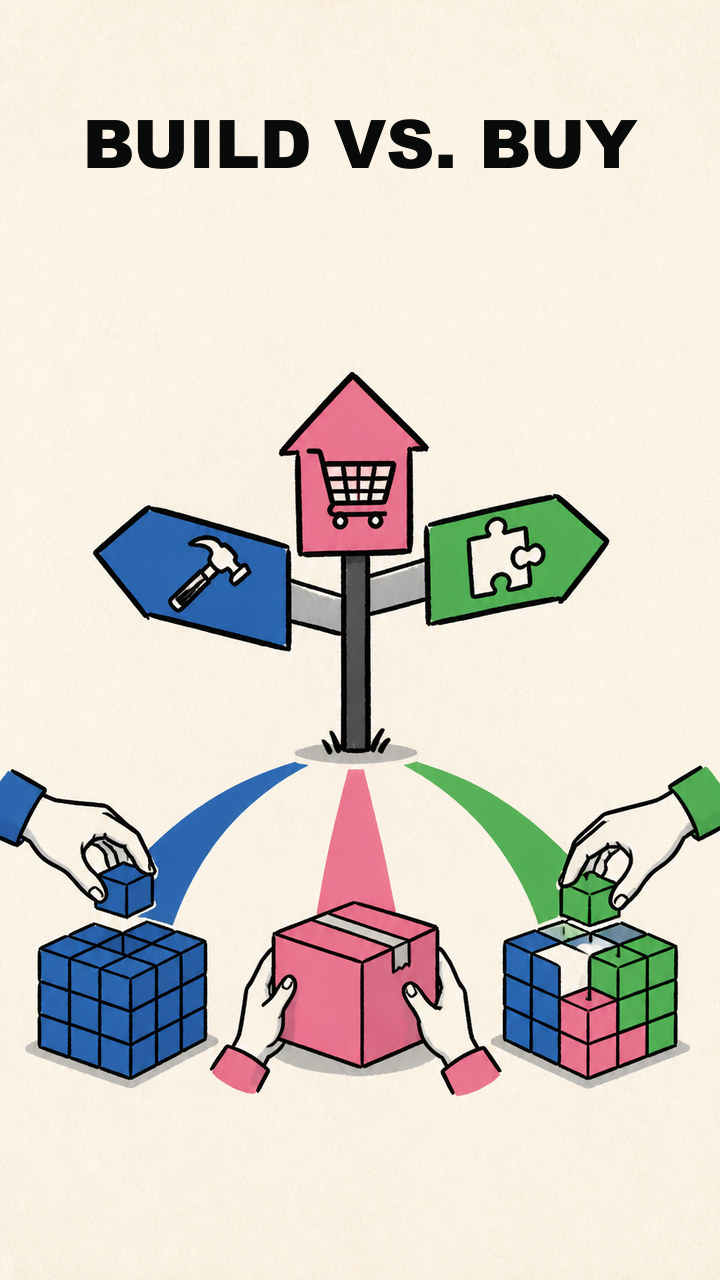
Build vs. buy is the decision whether to create and operate a capability internally, acquire it from a vendor, or combine purchased and internally developed components.
- Review state
- Reviewed in POC
- Freshness
- Current
- Version
- 2
Also called
- Build vs. Buy
- Build or Buy
Remember it this wayChoose which capabilities to own and which dependencies to accept.
In plain language
The choice compares more than initial price. It includes fit, speed, skills, data, control, integration, maintenance, risk, dependency, and the cost of changing direction later.
Why it matters
AI services can be quick to acquire while creating long-term data, vendor, and workflow dependencies. Internal builds can offer control while adding substantial operating responsibility.
Example
A company compares a vendor document assistant with an internal retrieval application built on a model API and its own access controls.
Common misconception
Build and buy are not always binary choices. Most systems combine vendor infrastructure, open components, internal data, and custom workflow design.
Related terms
Sources
- U.S. Government Accountability Office, DOE and NNSA Project Management: Analysis of Alternatives Could Be Improved (GAO-15-37)authoritative alternatives-analysis guidance on comparing operational effectiveness, costs, and risks.
Learn more
- Compare options using [[total-cost-of-ownership|Total Cost of Ownership]] and [[layered-sovereignty|Layered Sovereignty]].