Concept dictionary
Human Oversight
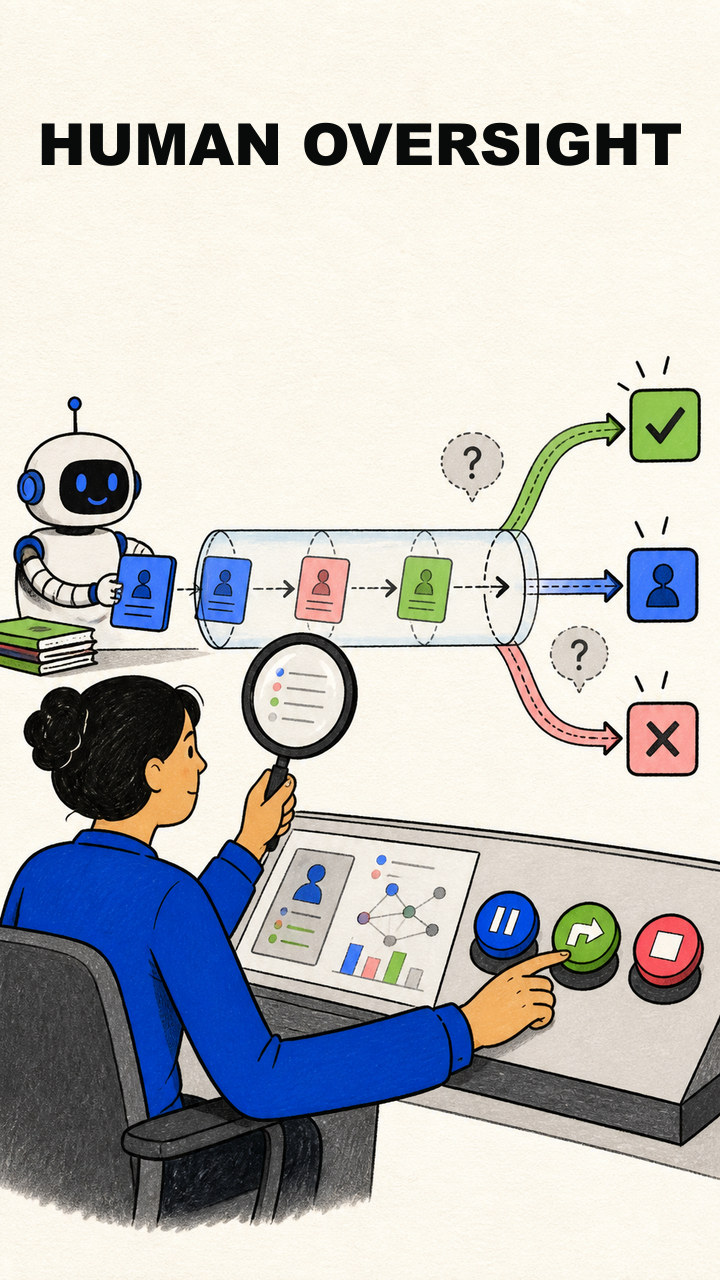
Human oversight is the arrangement of roles, information, authority, and controls that enables people to monitor an AI system, interpret its outputs, and intervene, override, or stop its operation when needed.
- Review state
- Reviewed in POC
- Freshness
- Current
- Version
- 1
Also called
- Human Oversight
- AI Human Oversight
Remember it this wayOversight means a person can see, understand, and act.
In plain language
Oversight is designed into the working system. The responsible people know what they are watching, can see relevant information, understand the system's limits, and have enough time and authority to challenge or stop it.
Why it matters
A human cannot reduce risk if the system hides what is happening, moves too quickly, or makes intervention impractical. Effective oversight connects human responsibility to usable controls throughout operation.
Example
A benefits-screening system flags cases, explains the factors and uncertainty that shaped each result, and gives a trained reviewer time and authority to inspect evidence, reject the recommendation, and pause the system when a pattern of harm appears.
Common misconception
Putting a person in the workflow does not automatically create meaningful oversight. A rushed approval click, unclear output, or reviewer without authority can become a rubber stamp.
Related terms
Sources
- European Union, Regulation (EU) 2024/1689, Article 14requirements and objectives for human oversight of high-risk AI systems.
- NIST, Artificial Intelligence Risk Management Framework 1.0differentiates human roles and responsibilities and calls for defined human-AI oversight arrangements.
Learn more
- Distinguish a specific [[human-review|Human Review]] from the operating structure that makes review and intervention effective.
- Connect oversight authority to [[human-ownership|Human Ownership]].