Concept dictionary
AI Governance
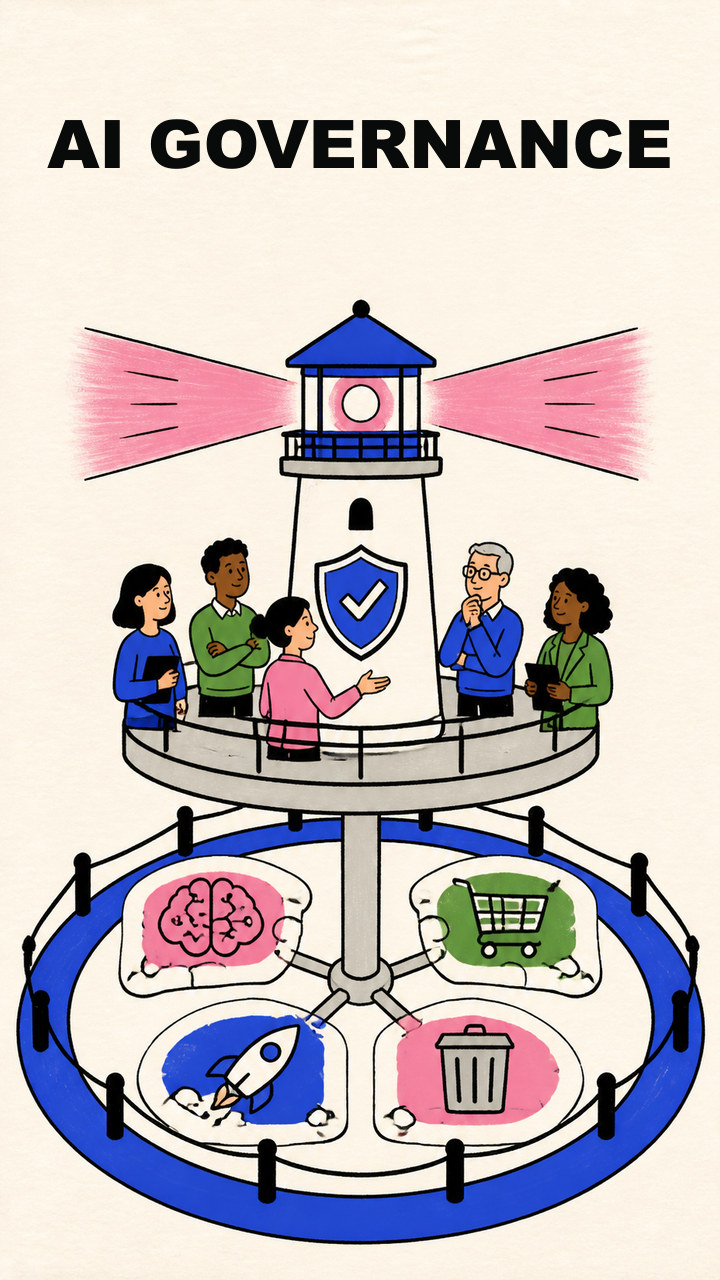
AI governance is the system of authority, policies, roles, controls, evidence, and oversight used to direct and monitor how an organization develops, acquires, deploys, and retires AI.
- Review state
- Reviewed in POC
- Freshness
- Current
- Version
- 2
Also called
- AI Governance
Remember it this wayGovernance connects authority, evidence, and action across the AI lifecycle.
In plain language
Governance answers who may decide, what evidence is required, which uses are allowed, how risk is monitored, and who acts when conditions change or something fails.
Why it matters
AI crosses technical, legal, operational, ethical, and business boundaries. Without coordinated governance, responsibility fragments while risks and dependencies remain connected.
Example
An organization requires named owners, use-case review, data checks, testing evidence, monitoring, incident procedures, and retirement criteria before an AI system enters production.
Common misconception
AI governance is not only a committee, policy document, or compliance exercise. It must shape actual decisions and operating behavior.
Related terms
Sources
- NIST AI Risk Management Framework 1.0consensus framework for governing, mapping, measuring, and managing AI risks.
- NIST AI RMF Core: Governofficial governance outcomes covering policies, accountability, roles, documentation, and lifecycle oversight.
Learn more
- Compare broad governance with the risk discipline in [[model-risk-management|Model Risk Management]].