Concept dictionary
Human Ownership
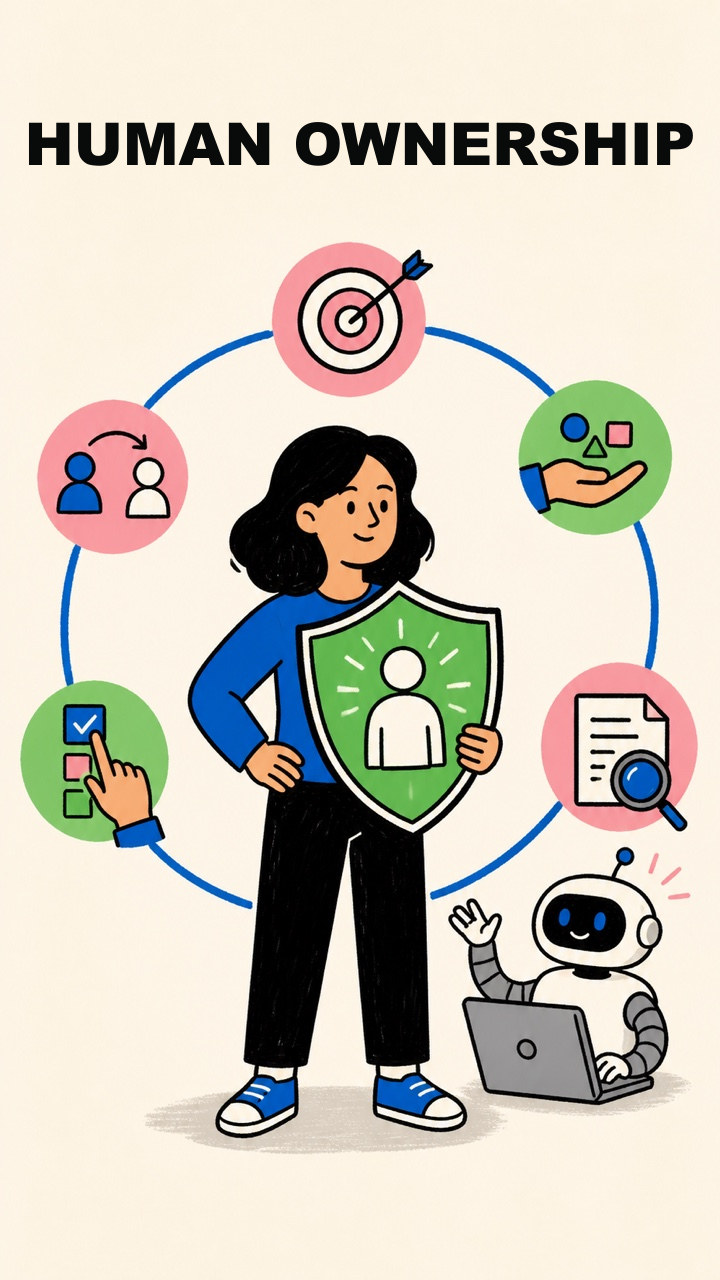
Human ownership means that people retain responsibility for defining the goal, deciding what information to provide, reviewing the result, choosing what to use or share, and owning the consequences.
AI assistance does not transfer accountability to the tool.
- Review state
- Reviewed in POC
- Freshness
- Current
- Version
- 3
Also called
- human-ownership
Remember it this wayAI can assist with the work. A person still owns the decision.
In plain language
Human ownership means a person remains responsible for the goal, the choices made along the way, and the result—even when AI helps with the work.
Why it matters
Phrases such as “the AI decided” can hide who had authority, who approved the action, and who is responsible for repair.
Human ownership keeps decision rights and accountability visible.
Example
A chatbot may draft a checklist, but a person decides whether the checklist is correct, appropriate, complete, and safe to use.
Common misconception
Human ownership does not mean a person must perform every step manually. People can delegate work to AI while retaining the authority and responsibility to set boundaries, review the result, and decide what happens next.
Related terms
Sources
No sources recorded yet.
Learn more
No learning links recorded yet.