Concept dictionary
Sensor
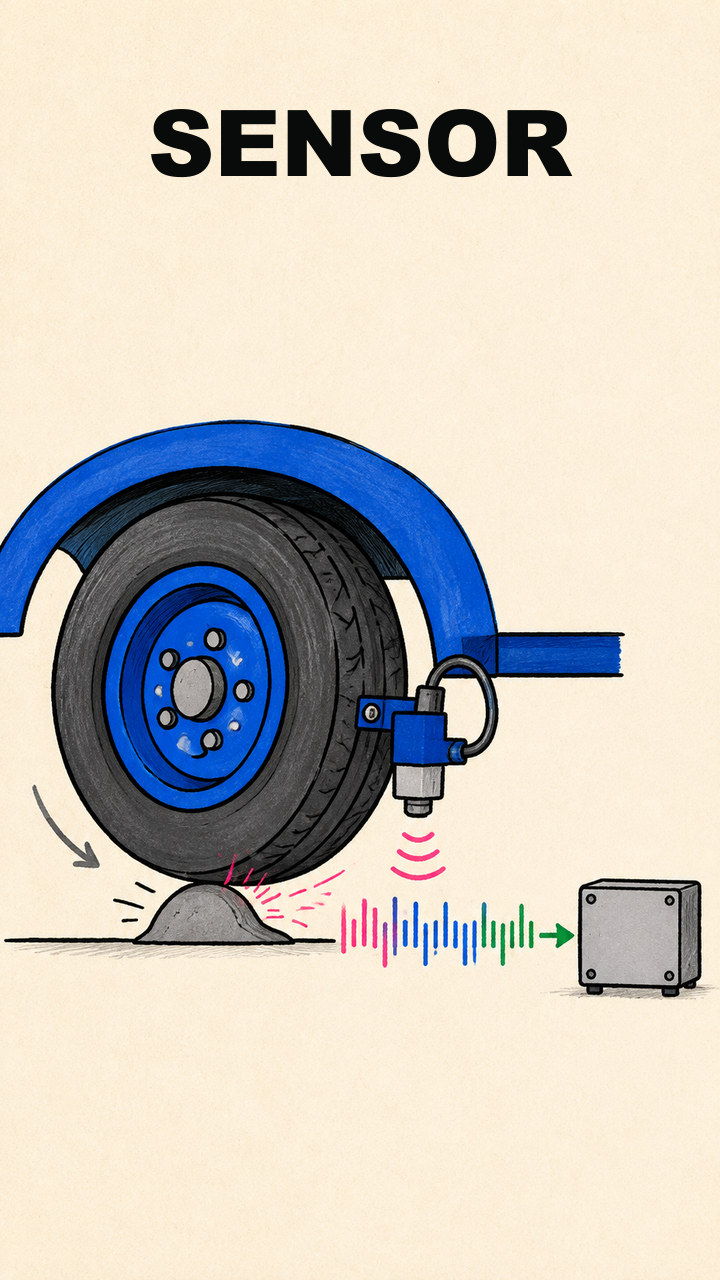
A sensor is a device that captures signals from the world, such as light, sound, motion, or temperature, so an AI system can perceive more than text alone.
- Review state
- Reviewed in POC
- Freshness
- Current
- Version
- 2
Also called
- Sensor
- Sensing Device
Remember it this wayA sensor turns a physical event into a usable signal.
In plain language
A sensor converts a physical phenomenon—such as light, sound, force, motion, or temperature—into a measurable signal a system can use.
Why it matters
A system can respond only to what its sensors capture. Range, calibration, noise, placement, sampling, and failure modes shape the reality available to the model or controller.
Example
A delivery robot combines camera, lidar, wheel encoder, and temperature readings to estimate its surroundings and operating condition.
Common misconception
A sensor does not understand what it measures. Interpretation happens elsewhere, and a precise signal can still be incomplete or misleading about the wider situation.
Related terms
Sources
- NIST, “A Glossary of Terms for Robotics”provides historical robotics definitions, including android and sensor.
Learn more
- Compare [[robot|Robot]], [[multimodal|Multimodal]], [[digital-twin|Digital Twin]], and [[observation|Observation]] to place Sensor in the surrounding system.
- Follow the cited source material above for the method, standard, or research context behind this draft.