Concept dictionary
Robot
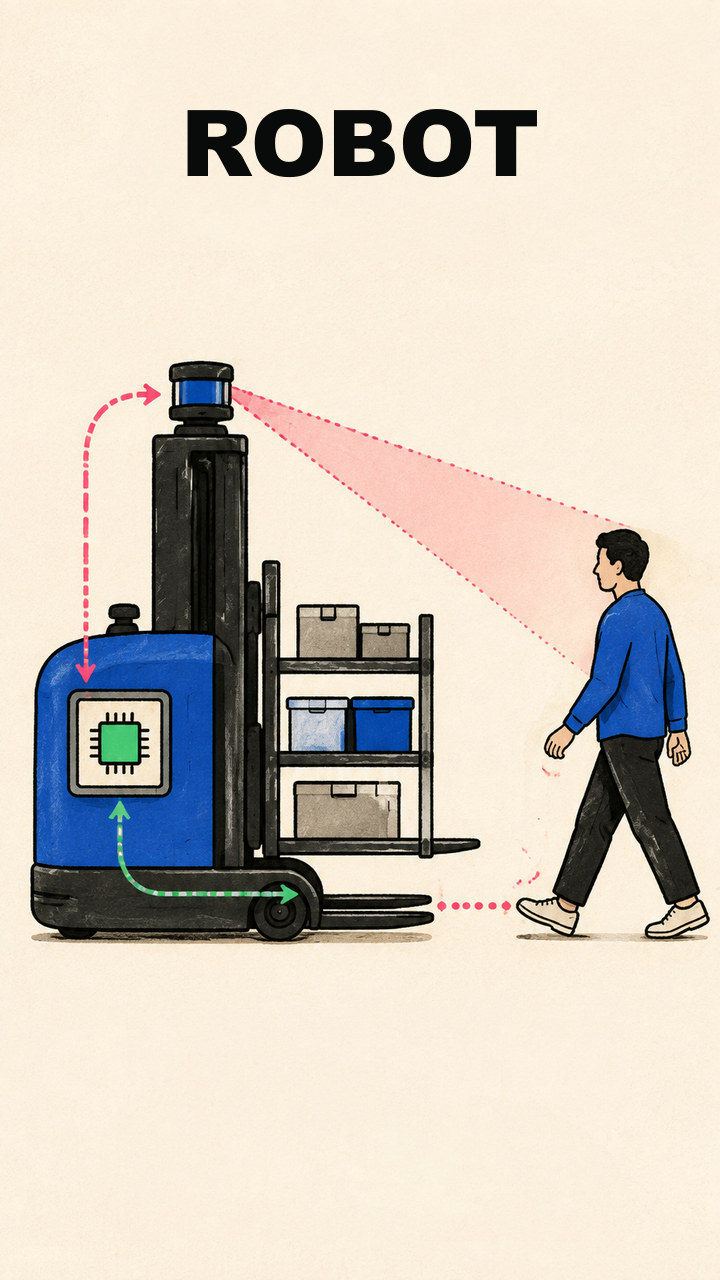
A robot is a machine that can sense, compute, and act in the physical world, and the word is often used loosely in older conversations about artificial intelligence.
- Review state
- Reviewed in POC
- Freshness
- Current
- Version
- 2
Also called
- Robot
- Robotic System
Remember it this wayA robot senses, computes, and acts in the physical world.
In plain language
A robot is a programmable physical mechanism that can sense, compute, and act in its environment with some degree of autonomy. Different robots vary widely in form and purpose.
Why it matters
Robots turn software decisions into physical action. That makes sensing limits, safe states, human control, maintenance, and environmental conditions central to system design.
Example
A mobile warehouse robot reads location sensors, plans a route, carries a shelf, and stops when a person enters its safety zone.
Common misconception
A robot does not have to look human, and not every automated machine is a robot. The term usually involves programmable physical action in an environment.
Related terms
Sources
- ISO, “ISO 8373:2021 Robotics — Vocabulary”establishes the current international vocabulary standard for robotics.
- ISO, “Smart Manufacturing”reproduces the ISO 8373 boundary around a programmable, actuated mechanism with a degree of autonomy.
Learn more
- Compare [[sensor|Sensor]], [[autonomous-system|Autonomous System]], [[android|Android]], and [[ai-agent|AI Agent]] to place Robot in the surrounding system.
- Follow the cited source material above for the method, standard, or research context behind this draft.