Concept dictionary
Safe Curiosity
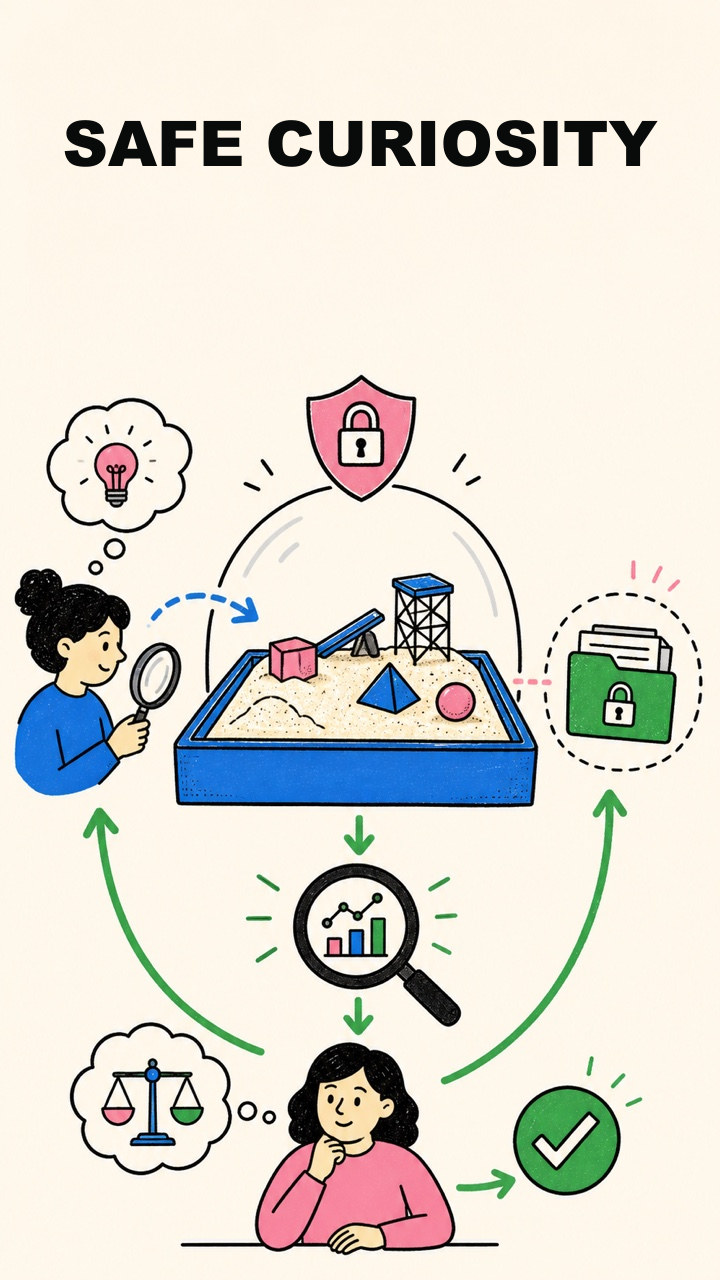
Safe curiosity is exploring a tool or idea through small, low-consequence experiments while protecting sensitive information, checking the result, and keeping important decisions human-owned.
- Review state
- Reviewed in POC
- Freshness
- Current
- Version
- 2
Also called
- safe-curiosity
Remember it this wayExplore small. Protect the real. Check what happens.
In plain language
Try a small experiment where a mistake will not cause meaningful harm. Use fictional or approved information, inspect what the tool does, and keep consequential decisions with a person.
Why it matters
Safe curiosity offers a path between uncritical enthusiasm and total avoidance.
A learner can explore what a tool does without treating the result as authority or taking unnecessary risk.
Example
A learner uses a fictional event notice to try a chatbot, then identifies what was useful, what needs checking, and what still belongs to a person.
Common misconception
Safe curiosity does not mean zero risk or permission to use real sensitive information. It means reducing the stakes, setting boundaries, and checking the result before expanding the experiment.
Related terms
Sources
- NIST, "AI Risk Management Framework Core"context-aware risk mapping, testing, documentation, and human participation in AI assessment.
- NIST, "AI RMF Playbook"voluntary actions for governing, mapping, measuring, and managing AI risk.