Concept dictionary
Load Rejection
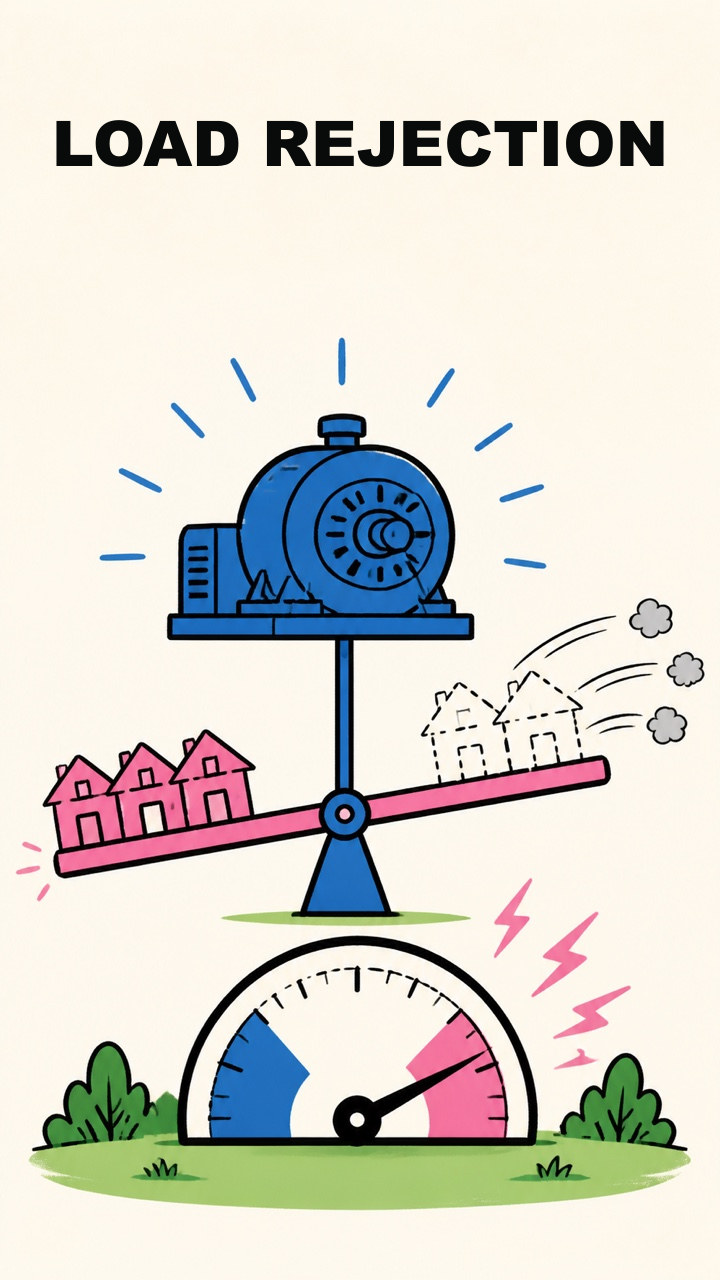
A sudden reduction in electrical demand that can create voltage or frequency instability.
- Review state
- Reviewed in POC
- Freshness
- Current
- Version
- 2
Also called
- Load Rejection
Remember it this wayThe load leaves faster than supply can adjust.
In plain language
When a large electrical load disconnects quickly, generation and demand are suddenly out of balance. The grid or local power system must respond fast enough to keep voltage and frequency within safe limits.
Why it matters
Large load changes can affect equipment and system stability beyond the facility that disconnected. Planning must account for protection, controls, and the size and speed of the change.
Example
A large industrial facility trips offline while generators continue producing at the prior level, causing frequency or voltage to rise until controls rebalance the system.
Common misconception
Load rejection is not a refusal by a utility to serve a customer. It is an electrical event in which demand suddenly falls.
Related terms
Sources
- North American Electric Reliability Corporation, Risk Mitigation for Emerging Large Loadsexplains that sudden disconnection of a large load can produce overvoltage and system overfrequency and may require fast downward-responsive resources. This directly supports the electrical-grid mechanism described in the term.
Learn more
- Review the event as a [[system|System]] transition with [[operational-slack|Operational Slack]].