Concept dictionary
ISO/IEC 42001
ISO/IEC 42001:2023 is an international standard that specifies requirements for establishing, implementing, maintaining, and continually improving an artificial intelligence management system within an organization.
- Review state
- Reviewed in POC
- Freshness
- Current
- Version
- 1
Also called
- ISO/IEC 42001
- ISO 42001
- ISO/IEC 42001:2023
Remember it this wayISO/IEC 42001 manages how the organization manages AI.
In plain language
The standard helps an organization put policies, responsibilities, risk practices, objectives, monitoring, and continual improvement around how it develops, provides, or uses AI. It applies a management-system approach to the organization rather than serving as a performance test for one model.
Why it matters
Organizations need repeatable governance that connects leadership, risk, operations, evidence, and improvement across many AI uses. ISO/IEC 42001 provides a structured and internationally recognized set of management-system requirements for that work.
Example
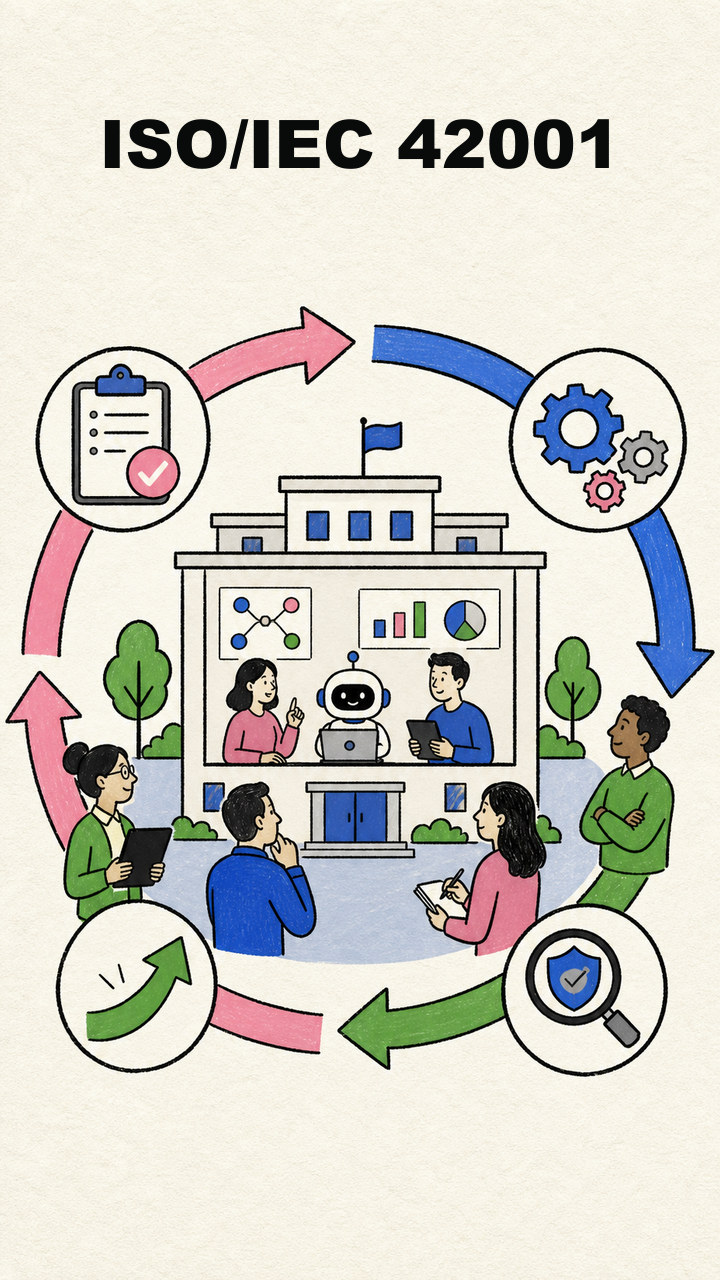
A software company creates an AI policy, assigns accountable roles, inventories its AI systems, assesses risks and impacts, controls changes, monitors performance, reviews incidents, and improves the program through a Plan-Do-Check-Act cycle.
Common misconception
ISO/IEC 42001 does not certify that an individual AI model is accurate, safe, ethical, or compliant with every applicable law. It sets requirements for the organization's AI management system.
Related terms
Sources
- ISO, “ISO/IEC 42001:2023 — AI management systems”official standard overview, scope, management-system definition, and Plan-Do-Check-Act framing.
Learn more
- Place the standard within the broader organizational system described by [[ai-governance|AI Governance]].
- Compare this certifiable management-system standard with the voluntary [[nist-ai-risk-management-framework|NIST AI Risk Management Framework]].