Concept dictionary
EU AI Act
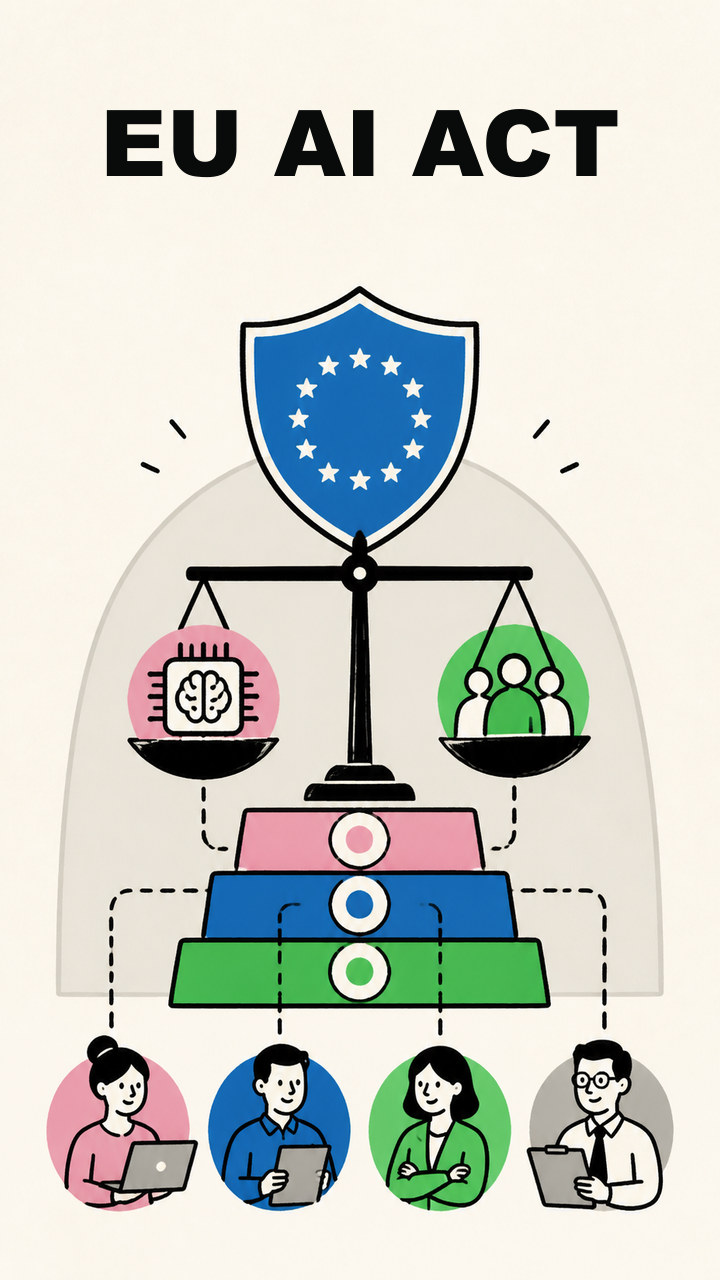
The EU AI Act is a European Union regulation that establishes obligations for AI systems and participants using a risk-based legal framework, with requirements that vary by system, role, and use.
- Review state
- Reviewed in POC
- Freshness
- Current
- Version
- 2
Also called
- EU AI Act
- European Union AI Act
Remember it this wayThe obligation follows the role, risk, use, and applicable date.
In plain language
The regulation does not treat all AI alike. It prohibits some practices, creates requirements for certain higher-risk uses, and assigns duties across providers, deployers, importers, distributors, and other actors.
Why it matters
Organizations may be affected by where systems and people operate, which role the organization plays, and how an AI system is used—not only where a vendor is headquartered.
Example
A company evaluating an AI-supported employment process determines its legal role, system classification, documentation duties, human-oversight needs, and applicable dates.
Common misconception
The EU AI Act is not one immediate rule applied identically to every AI feature. Scope, classification, role, exceptions, and phased applicability require current legal review.
Related terms
Sources
- European Union, Regulation (EU) 2024/1689, Artificial Intelligence Actofficial legal text; applicability and obligations depend on role, system, use, and date.
Learn more
- Consult the current official EU AI Act text and implementation guidance; use [[ai-governance|AI Governance]] to assign ownership.