Concept dictionary
Automated Decision-Making
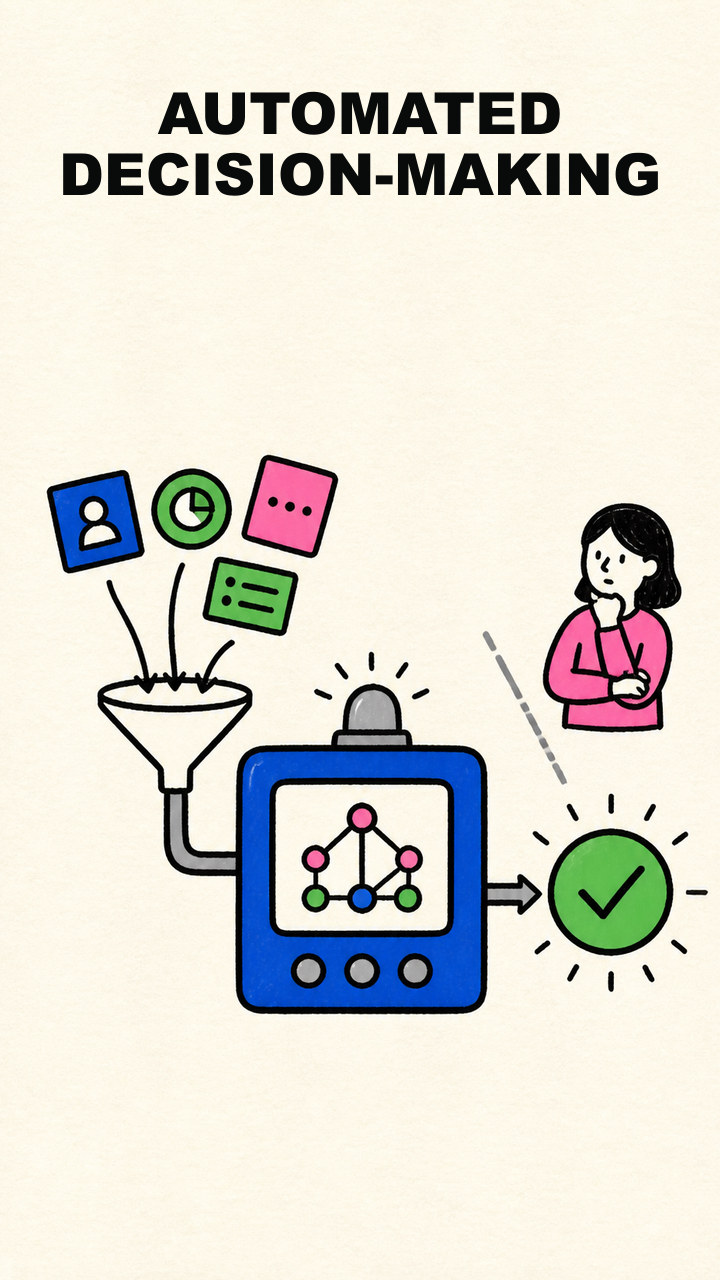
Automated decision-making is the use of data and computational rules or models to make, recommend, or materially shape determinations with limited or no direct human judgment at the decision point.
- Review state
- Reviewed in POC
- Freshness
- Current
- Version
- 2
Also called
- Automated Decision-Making
- ADM
- Automated Decision System
Remember it this wayThe system materially shapes who gets what decision.
In plain language
The system may approve, deny, rank, price, flag, or route a person or case. The degree of automation and the meaning of human involvement vary by system and legal context.
Why it matters
These decisions can affect access, opportunity, rights, safety, and resources. Teams need clear authority, appropriate review, explanation, monitoring, and contestability.
Example
A system automatically sets an insurance premium using applicant and behavioral data without an employee deciding each case.
Common misconception
A person clicking approve does not necessarily create meaningful human review if the person lacks time, information, authority, or a realistic ability to disagree.
Related terms
Sources
- Regulation (EU) 2016/679 (GDPR), Article 22official legal text covering decisions based solely on automated processing that produce legal or similarly significant effects.
- UK Information Commissioner's Office, Rights related to automated decision-making including profilingregulator guidance on automated decisions, profiling, safeguards, and individual rights.
Learn more
- Evaluate whether the workflow preserves a real [[decision-point|Decision Point]] and meaningful [[human-review|Human Review]].