Concept dictionary
Artificial Intelligence (AI)
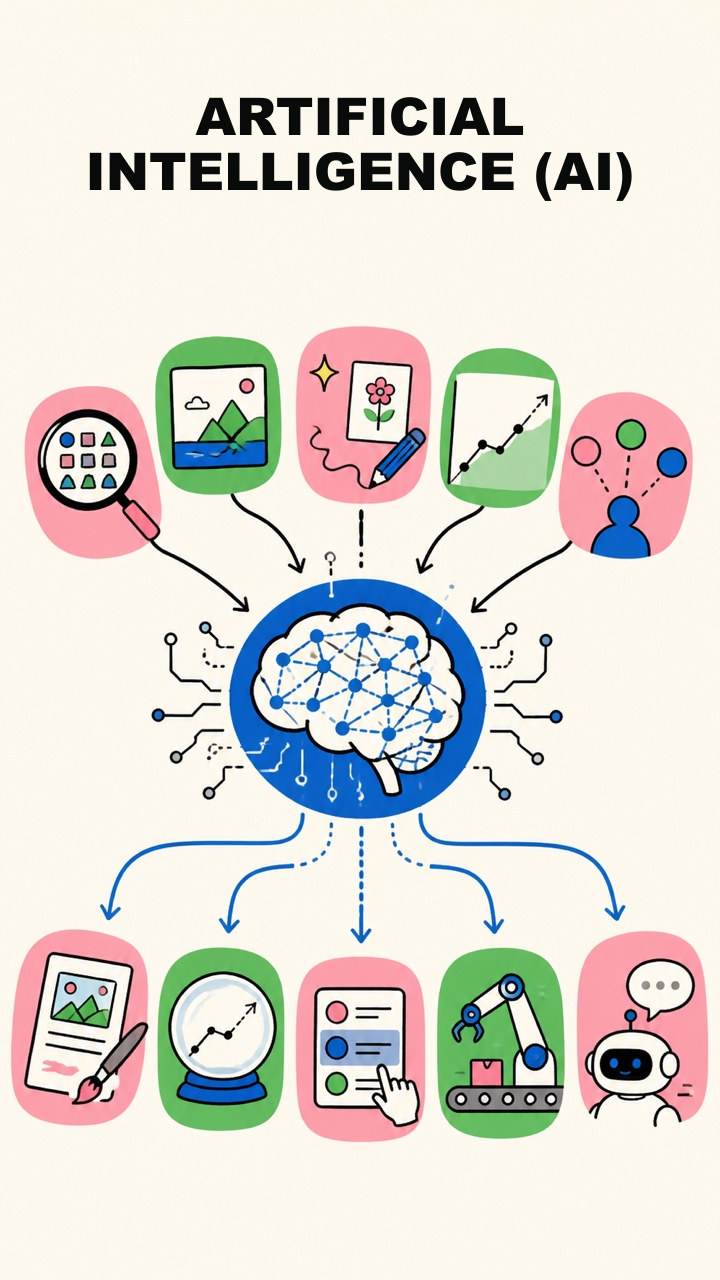
Artificial intelligence, or AI, is a broad family of computer systems and methods that recognize patterns, generate content, make predictions, recommend options, or support actions.
AI is not one tool or one behavior.
- Review state
- Reviewed in POC
- Freshness
- Current
- Version
- 2
Also called
- artificial-intelligence
Remember it this wayNo memory aid has been drafted yet.
In plain language
AI is an umbrella term for many different ways computers can use data and patterns to perform tasks such as sorting messages, recommending routes, recognizing images, predicting outcomes, or generating text.
The label tells you that some form of AI is involved. It does not tell you how the system works or how much human oversight it needs.
Why it matters
Generative AI is one part of AI.
Calling every AI system a chatbot hides important differences in what the system does, what information it uses, and what kind of review or control it needs.
Example
A spam filter, route optimizer, recommendation system, and generative-AI chatbot may all use AI, but they solve different problems and should not be evaluated in the same way.
Common misconception
No common misconception has been drafted yet.
Related terms
Sources
No sources recorded yet.
Learn more
No learning links recorded yet.