Concept dictionary
Training
Training is the phase where a model learns from data by updating its internal parameters.
- Review state
- Reviewed in POC
- Freshness
- Current
- Version
- 2
Also called
- Training
- Model Training
Remember it this wayTraining changes the parameters; prompting changes the immediate context.
In plain language
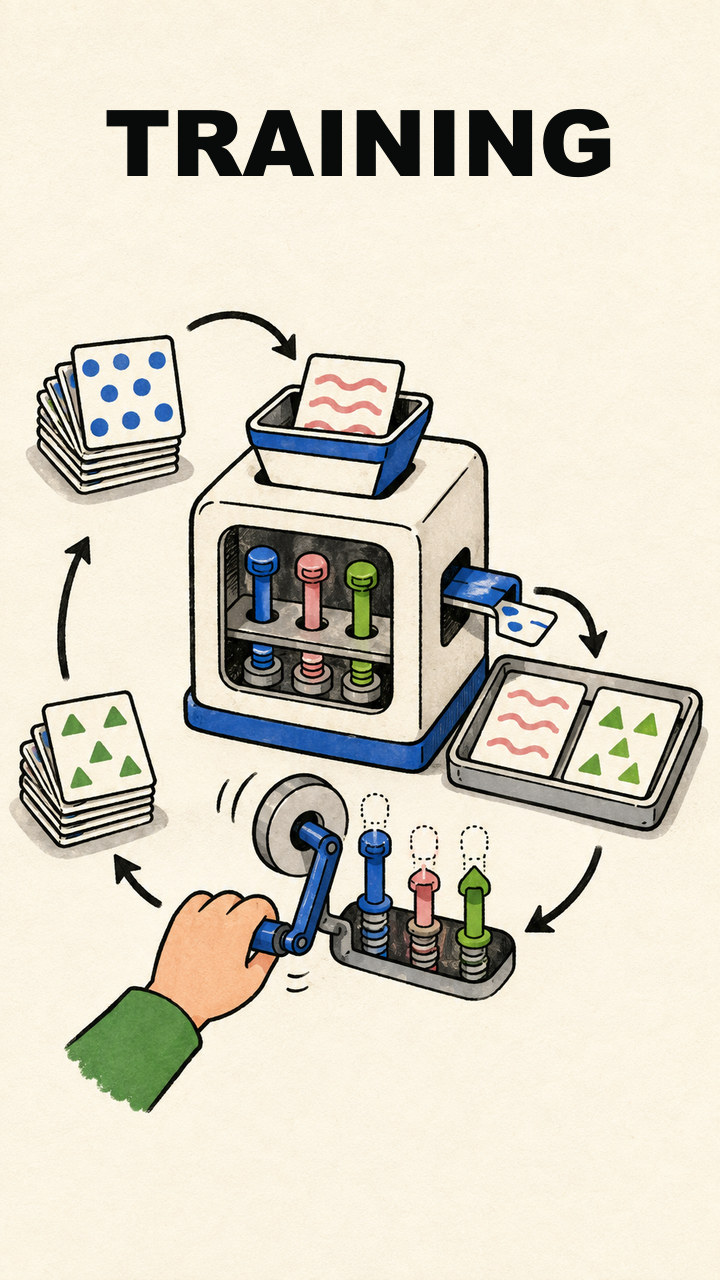
Training is the process that adjusts a model’s internal parameters using examples and an objective. Repeated updates make the model better at reducing its training loss for the selected task.
Why it matters
Training choices determine what behavior the model is rewarded for and what data it learns from. More training is not automatically better if the data or objective misses the real need.
Example
A classifier processes a batch of labeled images, measures prediction loss, computes parameter changes, and repeats the cycle across many batches.
Common misconception
Training is not the same as giving a deployed model new information in a prompt. Prompt context affects a session; training changes model parameters.
Related terms
Sources
- Google for Developers, “Machine Learning Glossary”provides established boundaries for core machine-learning vocabulary.
Learn more
- Compare [[model|Model]], [[parameters|Parameters]], [[dataset|Dataset]], and [[loss-function|Loss Function]] to place Training in the surrounding system.
- Follow the cited source material above for the method, standard, or research context behind this draft.