Concept dictionary
State
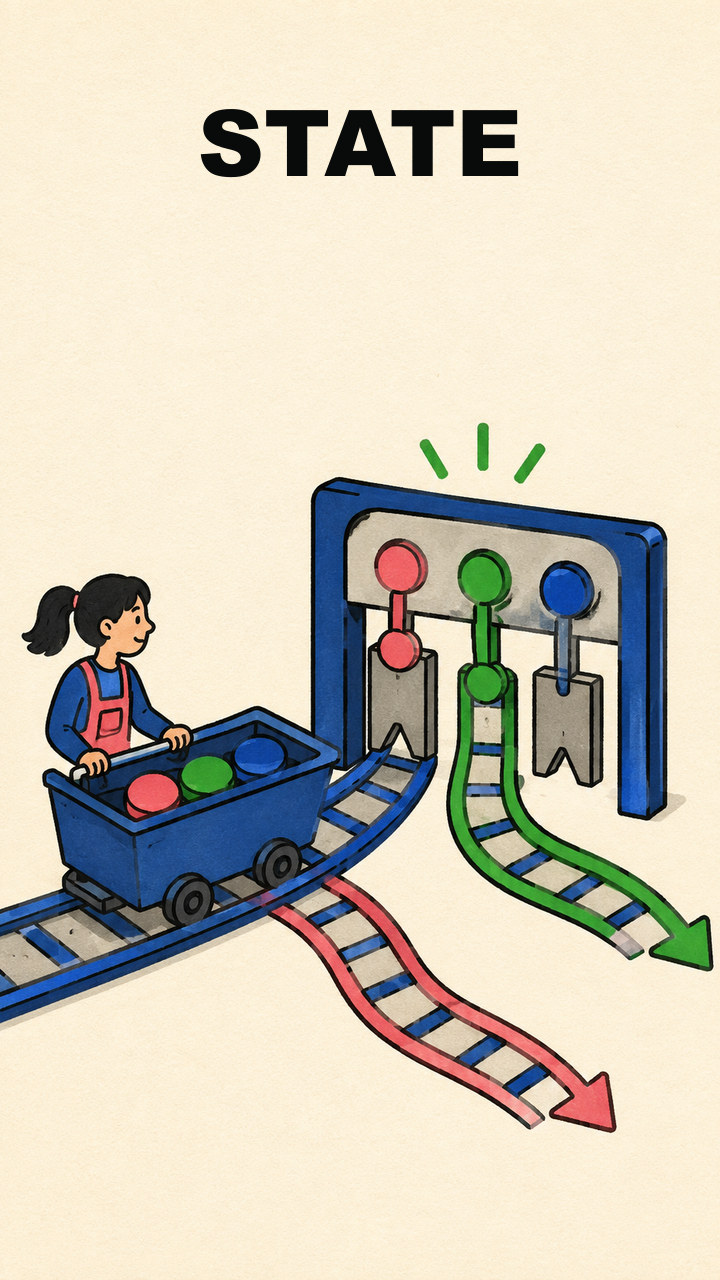
State is the information a system keeps track of so it can continue behaving consistently across steps, turns, or events.
- Review state
- Reviewed in POC
- Freshness
- Current
- Version
- 2
Also called
- State
- System State
Remember it this wayState is what the system carries forward.
In plain language
State is the information a system currently carries that affects what it does next. State may include values, history, permissions, progress, or relationships that persist across an event or step.
Why it matters
Unclear or stale state causes inconsistent behavior, broken handoffs, and difficult debugging. Naming who owns state, when it changes, and what source is authoritative makes workflows more reliable.
Example
An order workflow stores whether payment is authorized, inventory is reserved, and shipment is released. Each event changes the order’s state and which actions are allowed next.
Common misconception
State is not every piece of data a system can access. It is the information whose current value influences present or future behavior.
Related terms
Sources
- David Harel, “Statecharts: A Visual Formalism for Complex Systems”provides a formal systems foundation for representing state and transitions in complex reactive systems.
Learn more
- Compare [[current-state|Current State]], [[relationship-state|Relationship State]], [[state-transition-protocol|State Transition Protocol]], and [[system|System]] to place State in the surrounding system.
- Follow the cited source material above for the method, standard, or research context behind this draft.