Concept dictionary
Shadow AI
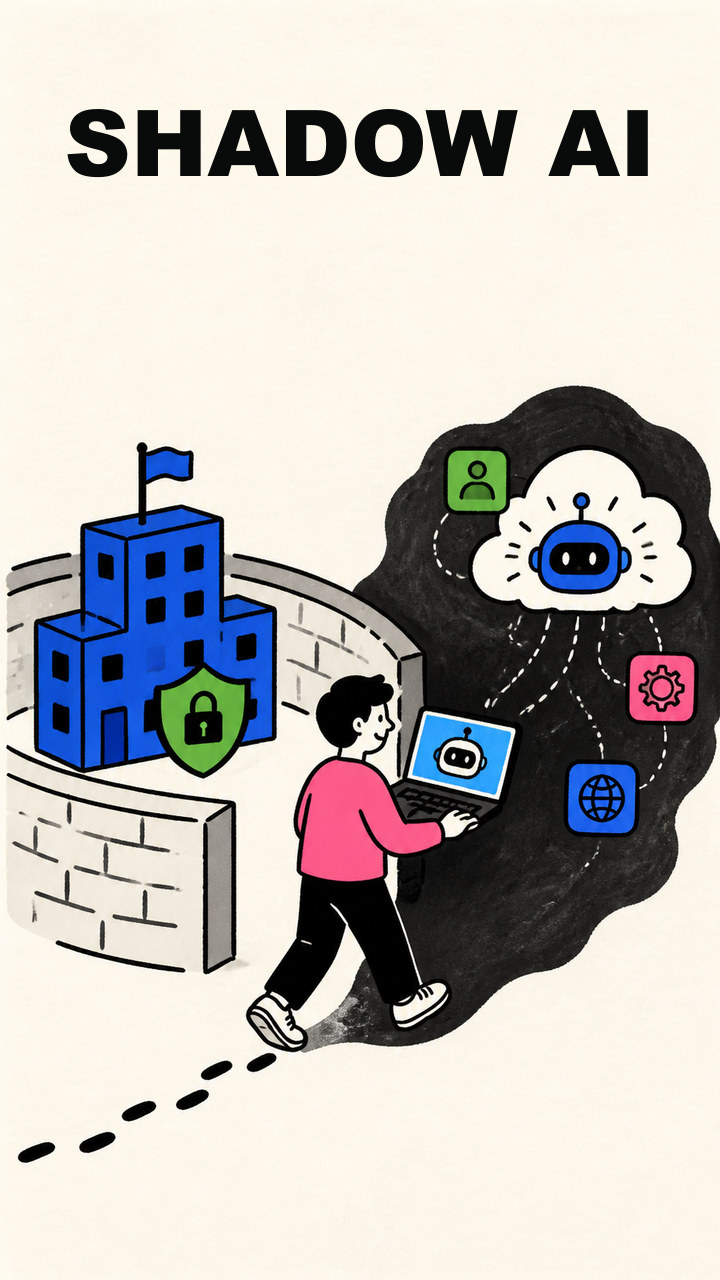
Shadow AI is the use of AI tools, accounts, integrations, or workflows outside an organization's approved governance, security, procurement, or visibility processes.
- Review state
- Reviewed in POC
- Freshness
- Current
- Version
- 2
Also called
- Shadow AI
Remember it this wayIf the organization cannot see the AI use, it cannot govern the risk or learn from the need.
In plain language
Employees may adopt a public assistant, browser extension, automated workflow, or personal account to get work done without the organization knowing what data or decisions are involved.
Why it matters
Hidden use creates unknown data flows, contracts, dependencies, quality risks, and incident paths. It can also signal that approved tools do not meet real workflow needs.
Example
An employee pastes confidential meeting notes into a free personal chatbot because the approved system lacks a useful summarization feature.
Common misconception
Shadow AI is not solved only by prohibition. Organizations also need usable alternatives, literacy, clear boundaries, and a safe path for employees to surface unmet needs.
Related terms
Sources
- NIST AI 100-1, Artificial Intelligence Risk Management Frameworkgovernance framework supporting inventory, accountability, and oversight of AI use.
- NIST AI 600-1, Generative Artificial Intelligence ProfileAI-specific guidance on third-party resources, acceptable-use policies, monitoring, and governance.
Learn more
- Treat hidden use as both a governance risk and a [[friction|Friction]] signal.