Concept dictionary
AI Literacy
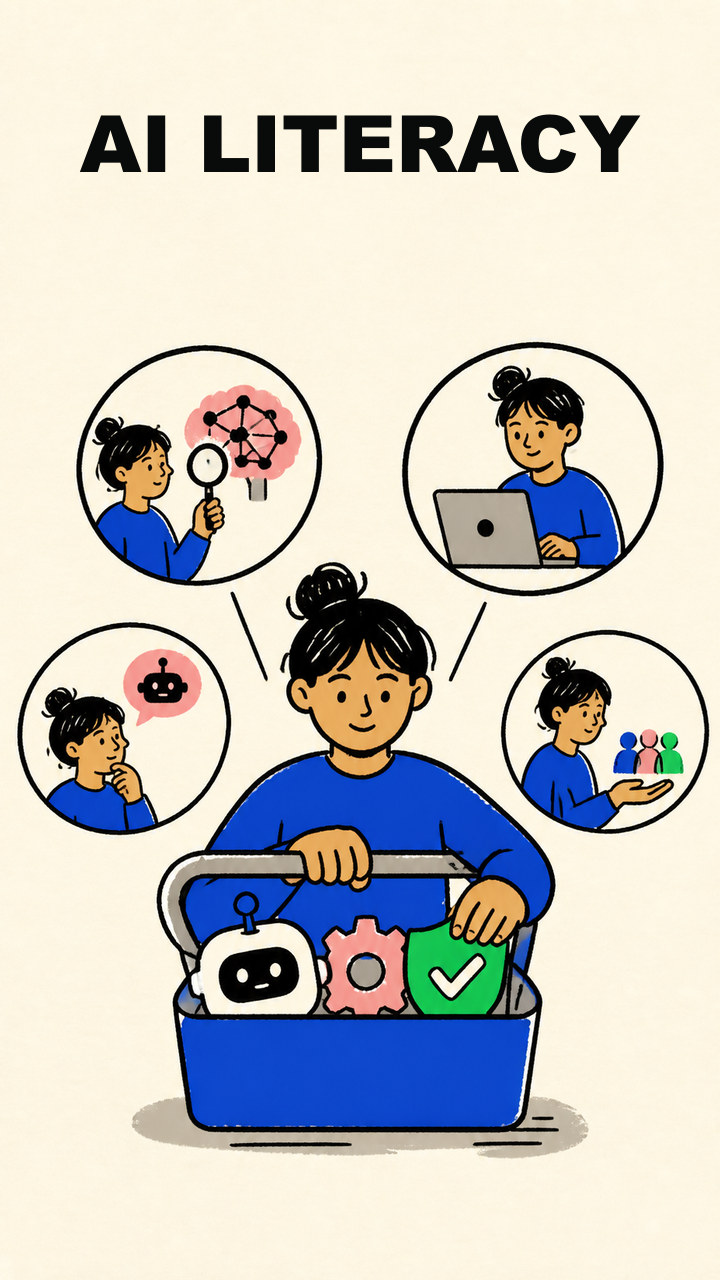
AI literacy is the practical ability to understand, use, question, and make responsible decisions about AI systems within one's role and context.
- Review state
- Reviewed in POC
- Freshness
- Current
- Version
- 2
Also called
- AI Literacy
Remember it this wayUnderstand enough to participate, question, and remain responsible.
In plain language
An AI-literate person does not need to build models. They can recognize what a system is doing, ask useful questions, protect information, test claims, identify limits, and know when human judgment or specialist help is needed.
Why it matters
People encounter AI through products, decisions, and workplace changes. Literacy supports participation and informed choice without requiring hype, fear, or blind trust.
Example
An employee can explain why an AI summary needs verification, choose safe information to share, and decide whether the tool fits the task.
Common misconception
AI literacy is not memorizing prompt tricks or becoming a programmer. It is a durable set of concepts, habits, and decision skills.
Related terms
Sources
- Regulation (EU) 2024/1689, Article 4 — AI literacyofficial European Union requirement addressing the knowledge, experience, education, training, and context needed by people operating or using AI systems.
- UNESCO, AI Competency Framework for Studentsofficial competency framework spanning human-centered thinking, AI ethics, techniques and applications, and system design.
Learn more
- Follow the Learning Lab's AI Literacy for the Rest of Us track and practice [[safe-curiosity|Safe Curiosity]].