Concept dictionary
Robustness
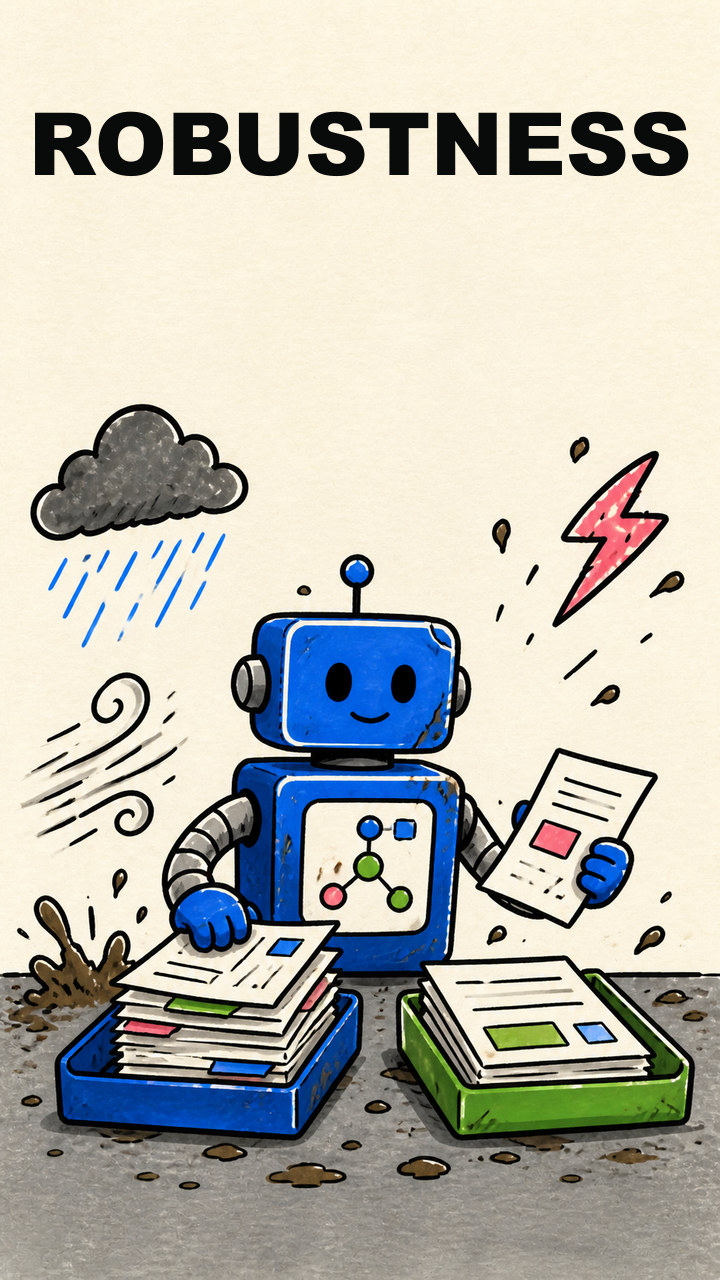
Robustness is the degree to which a model or system continues to perform acceptably when inputs, conditions, users, or attacks differ from the ordinary cases used in development.
- Review state
- Needs review
- Freshness
- Current
- Version
- 2
Also called
- Robustness
- Model Robustness
Remember it this wayRobust means the system can take a hit without losing the task.
In plain language
A robust system does not fall apart as soon as the wording, environment, data quality, load, or behavior moves outside the happy path.
Why it matters
Real use contains exceptions and change. Average test performance can hide brittle behavior that creates operational or safety failures.
Example
A document tool is tested on scans, unusual layouts, missing pages, and adversarial text rather than only clean sample files.
Common misconception
Robustness does not mean perfect performance everywhere. It requires an explicit operating range and evidence about behavior within and outside it.
Related terms
Sources
- NIST, Artificial Intelligence Risk Management Framework 1.0defines robustness or generalizability as maintaining performance under varied circumstances and connects it to trustworthy AI.
- NIST AI Resource Center, AI Risks and Trustworthinessaccessible official presentation of robustness, reliability, security, and resilience.
Learn more
- Test exceptions with [[red-teaming|Red Teaming]] and record the accepted operating range.