Concept dictionary
Model Drift
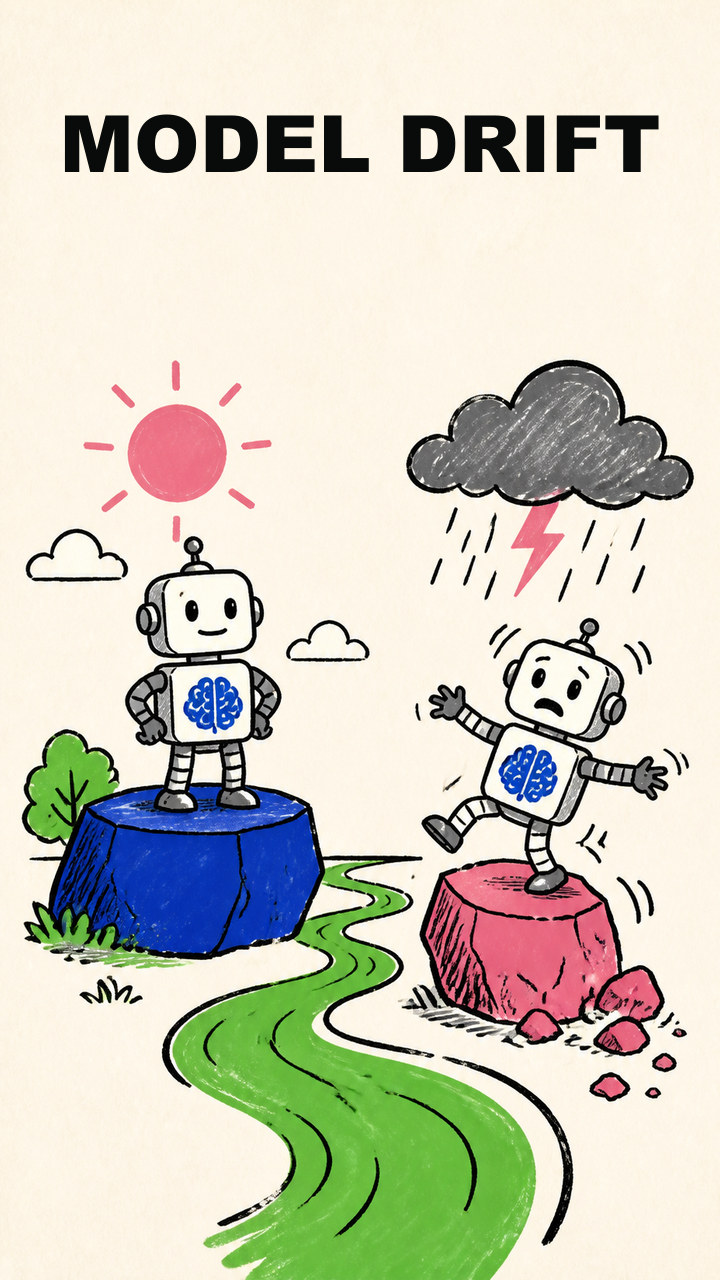
Model drift is a decline or change in a model's real-world performance because the data, behavior, relationships, or conditions it encounters no longer match those under which it was developed and evaluated.
- Review state
- Needs review
- Freshness
- Current
- Version
- 2
Also called
- Model Drift
Remember it this wayThe model stayed; the world moved.
In plain language
The model may be unchanged while the world around it moves. New customer behavior, fraud patterns, language, equipment, policies, or workflows can make earlier patterns less useful.
Why it matters
A model that passed its original tests can become unreliable after deployment. Monitoring and rereview must be tied to changing conditions, not only elapsed time.
Example
A fraud model trained before a new payment method is introduced begins missing scams that use the new channel.
Common misconception
Model drift is not simply a software bug or a model changing its own weights. The mismatch can arise because the environment changed.
Related terms
Sources
- NIST, Challenges to the Monitoring of Deployed AI Systems (NIST AI 800-4)current report on post-deployment monitoring, performance degradation, distribution shift, and drift.
- NIST, Artificial Intelligence Risk Management Framework 1.0explains that changing data can affect deployed system functionality and trustworthiness.
Learn more
- Compare system assumptions with [[context-to-reality-drift|Context-to-Reality Drift]].