Concept dictionary
Computer Vision
Vision is the AI modality focused on images and video, including tasks like recognition, detection, segmentation, and scene understanding.
- Review state
- Reviewed in POC
- Freshness
- Current
- Version
- 2
Also called
- Computer Vision
- Machine Vision
Remember it this wayComputer vision turns pixels and frames into task-specific information.
In plain language
Computer vision is the field of building systems that extract useful information from images or video. Common tasks include classification, detection, segmentation, tracking, and scene understanding.
Why it matters
Visual data can be powerful and ambiguous. Knowing that a system performs a particular vision task helps people ask what it detects, how it was evaluated, and where lighting, viewpoint, or data gaps may cause failure.
Example
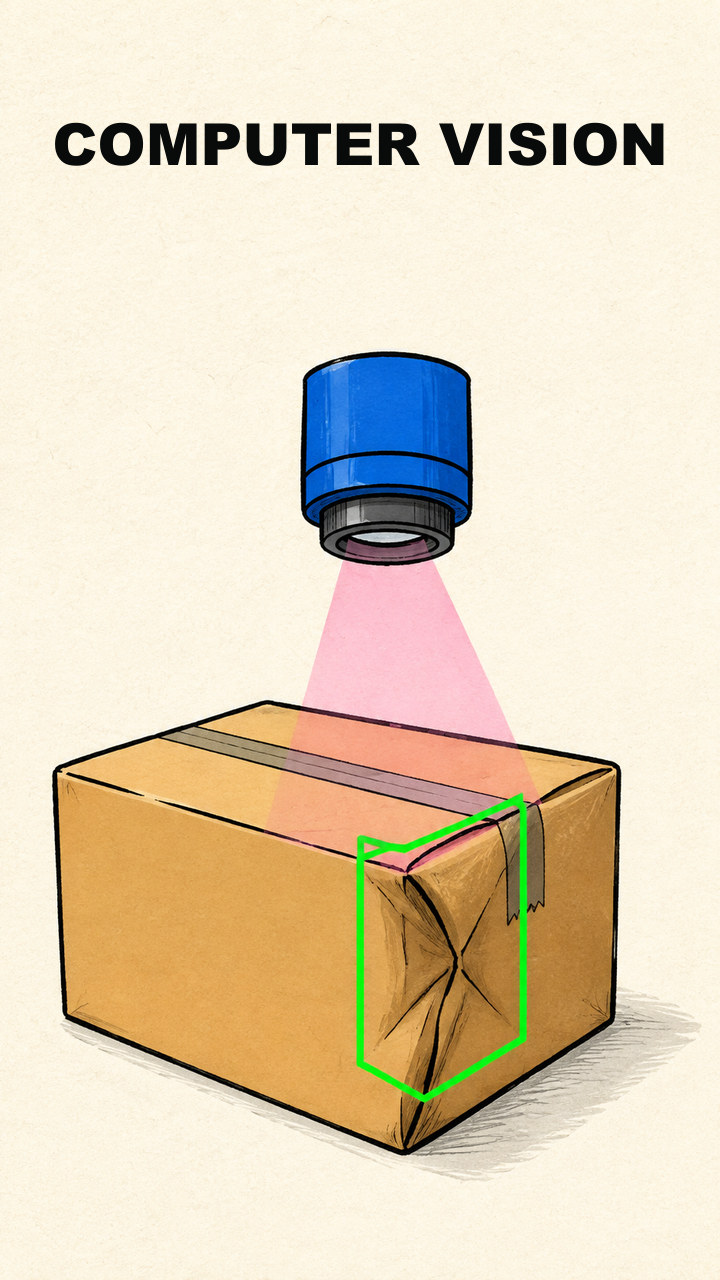
A warehouse camera system detects damaged packages and marks the image region that triggered the alert for a human inspector.
Common misconception
Computer vision does not mean a computer sees or understands the world as a person does. It performs bounded operations on visual signals.
Related terms
Sources
- Stanford HAI, “What Is Computer Vision?”defines computer vision around identifying and understanding information in images and videos.
Learn more
- Compare [[image|Image]], [[video|Video]], [[multimodal|Multimodal]], and [[deep-learning|Deep Learning]] to place Computer Vision in the surrounding system.
- Follow the cited source material above for the method, standard, or research context behind this draft.