Concept dictionary
Alignment
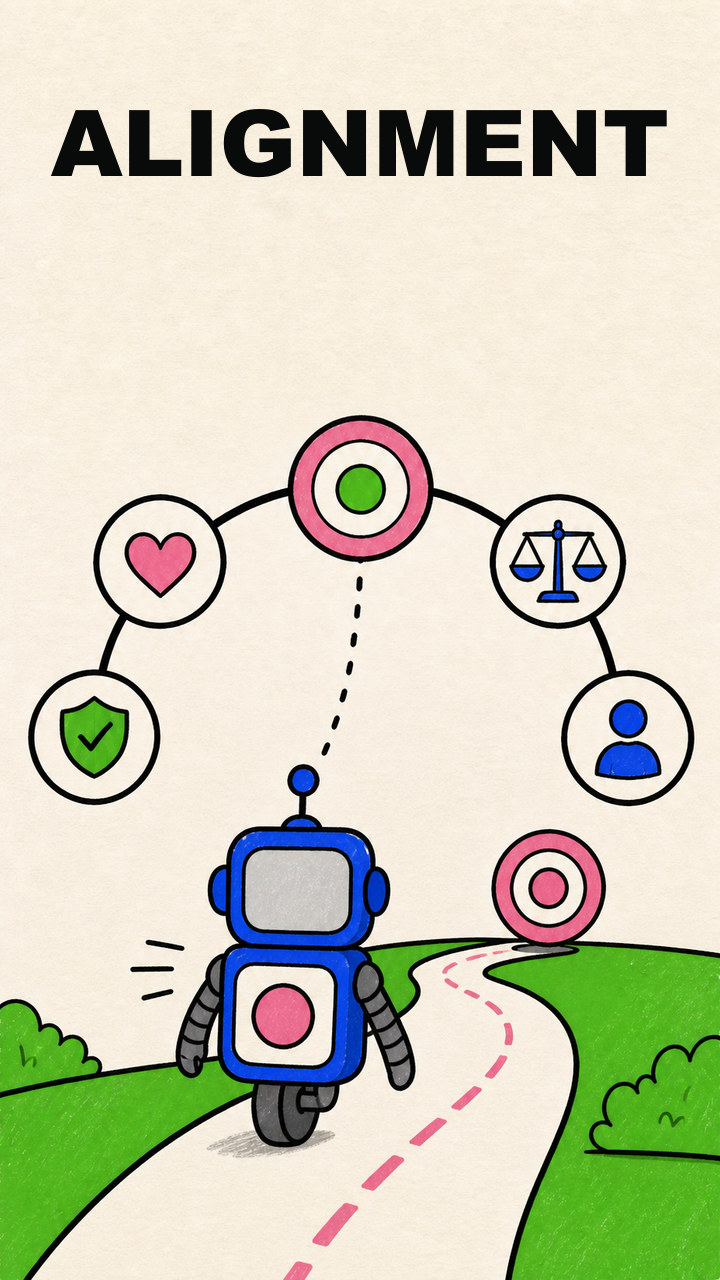
Alignment is the effort to make an AI system's objectives, behavior, and effects remain consistent with the intentions, values, constraints, and legitimate authority governing its use.
- Review state
- Reviewed in POC
- Freshness
- Current
- Version
- 2
Also called
- Alignment
- AI Alignment
Remember it this wayThe system must pursue the real goal within legitimate boundaries.
In plain language
A system can follow a narrow metric while missing the real purpose of the work. Alignment asks whether it is pursuing the right outcome in acceptable ways and under appropriate human control.
Why it matters
Misalignment can arise from objectives, data, incentives, instructions, tools, deployment context, or changing conditions. It is a system problem, not only a model-training problem.
Example
A service bot optimized only to shorten calls closes unresolved cases, improving the metric while harming the customer outcome.
Common misconception
Alignment is not a single solved test or a promise that everyone shares one value system. It requires explicit context, governance, monitoring, and revision.
Related terms
Sources
- OpenAI, Our approach to alignment researchprimary developer account describing alignment as making AI systems follow human intent and values while acknowledging unresolved sociotechnical questions.
- UK AI Security Institute, Research Agendagovernment research agenda treating alignment as the reliability with which AI systems behave as intended and examining the limits of current approaches.
Learn more
- Compare intended outcomes with [[larger-business-context|Larger Business Context]] and [[objective-escape|Objective Escape]].