Concept dictionary
Tool Use
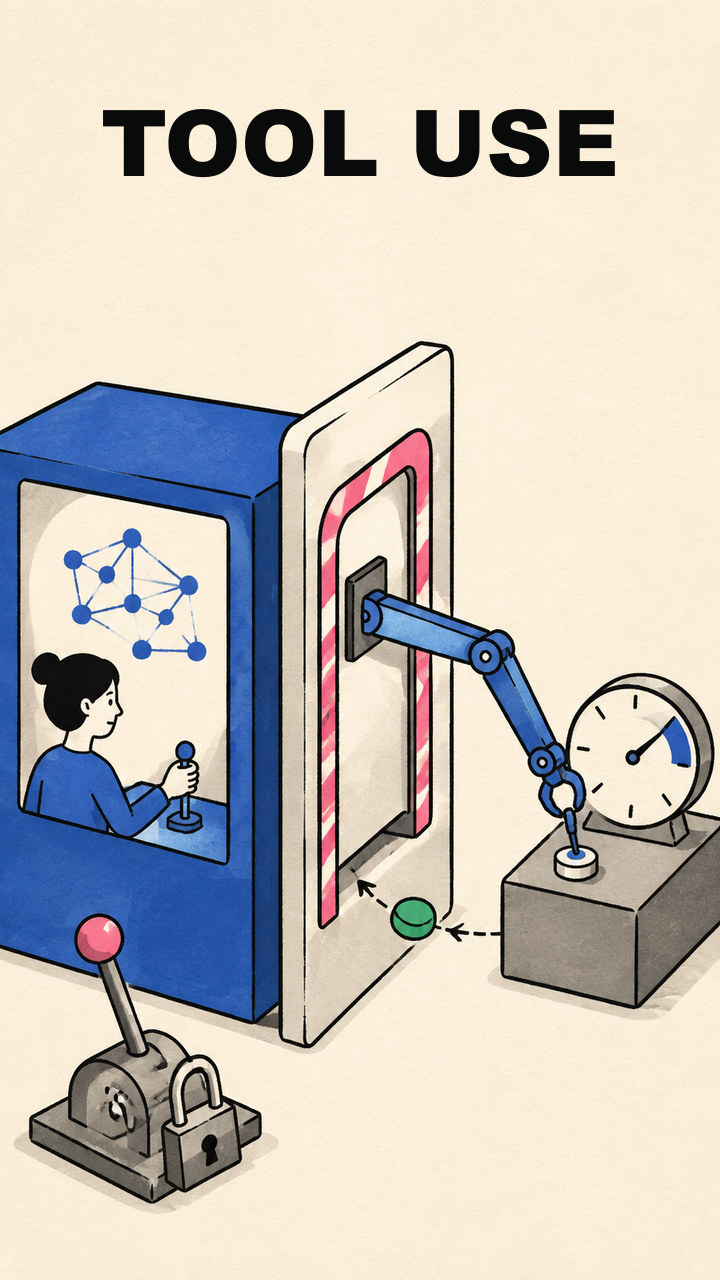
Tool use occurs when a model or agent invokes an external capability and incorporates the result into its work.
- Review state
- Reviewed in POC
- Freshness
- Current
- Version
- 3
Also called
- Tool Use
- Tool Calling
Remember it this wayA tool is an external capability; tool use crosses a boundary.
In plain language
Tool use occurs when an AI system invokes an external capability—such as search, a calculator, code execution, or a business API—and incorporates the result into its work.
Why it matters
Tools extend what a model can do and connect it to real systems. They also create authority, security, reliability, and verification questions because a generated request can cause external effects.
Example
An assistant calls a read-only inventory API, checks the returned stock level, and cites the result in its answer. It cannot place an order without a separate approval.
Common misconception
Giving a model a tool does not make it competent or authorized to use that tool in every situation. Selection, permissions, argument validation, and result checking remain necessary.
Related terms
Sources
- Timo Schick and colleagues, “Toolformer: Language Models Can Teach Themselves to Use Tools”studies model decisions about which APIs to call, when to call them, and how to use their results.
Learn more
- Compare [[ai-agent|AI Agent]], [[application-programming-interface|Application Programming Interface]], [[mcp-server|MCP Server]], and [[human-oversight|Human Oversight]] to place Tool Use in the surrounding system.
- Follow the cited source material above for the method, standard, or research context behind this draft.