Concept dictionary
Retrieval-Augmented Generation
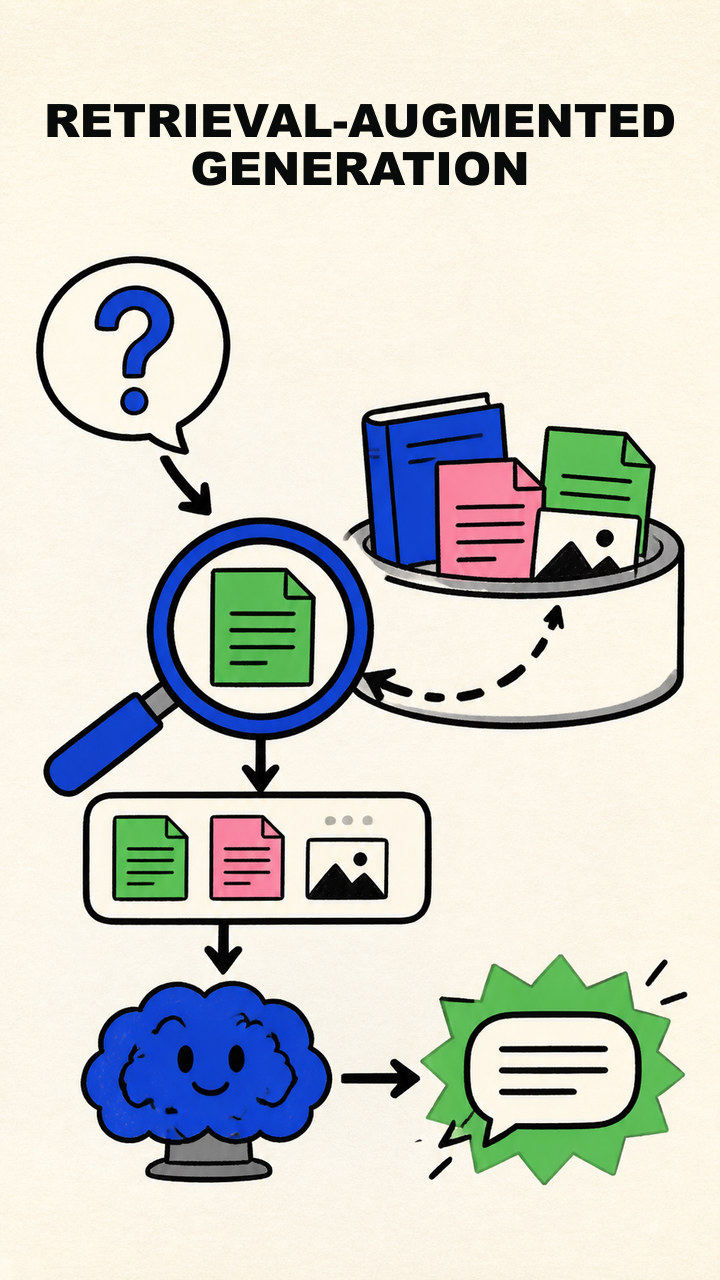
Retrieval-augmented generation is a pattern in which a system retrieves relevant external material at use time and supplies it to a generative model as context for producing an answer.
- Review state
- Reviewed in POC
- Freshness
- Current
- Version
- 2
Also called
- Retrieval-Augmented Generation
- RAG
Remember it this wayRetrieve first; generate with what was found.
In plain language
The model does not rely only on what it learned during training. The surrounding application searches a document collection or data source, selects material, and includes that material with the request.
Why it matters
RAG can improve relevance and freshness, but results still depend on source quality, retrieval quality, context limits, instructions, and whether the response accurately reflects the retrieved material.
Example
An employee asks about travel reimbursement, and the application retrieves the current policy sections before the model drafts an answer with citations.
Common misconception
RAG does not guarantee grounded or correct answers. The system can retrieve the wrong passage, omit important context, or misstate what the source says.
Related terms
Sources
- Lewis et al., Retrieval-Augmented Generation for Knowledge-Intensive NLP Tasksprimary paper introducing retrieval-augmented generation.
Learn more
- Examine retrieval quality through [[evidence-selection|Evidence Selection]] and output quality through [[verification|Verification]].