Concept dictionary
Multi-Agent System
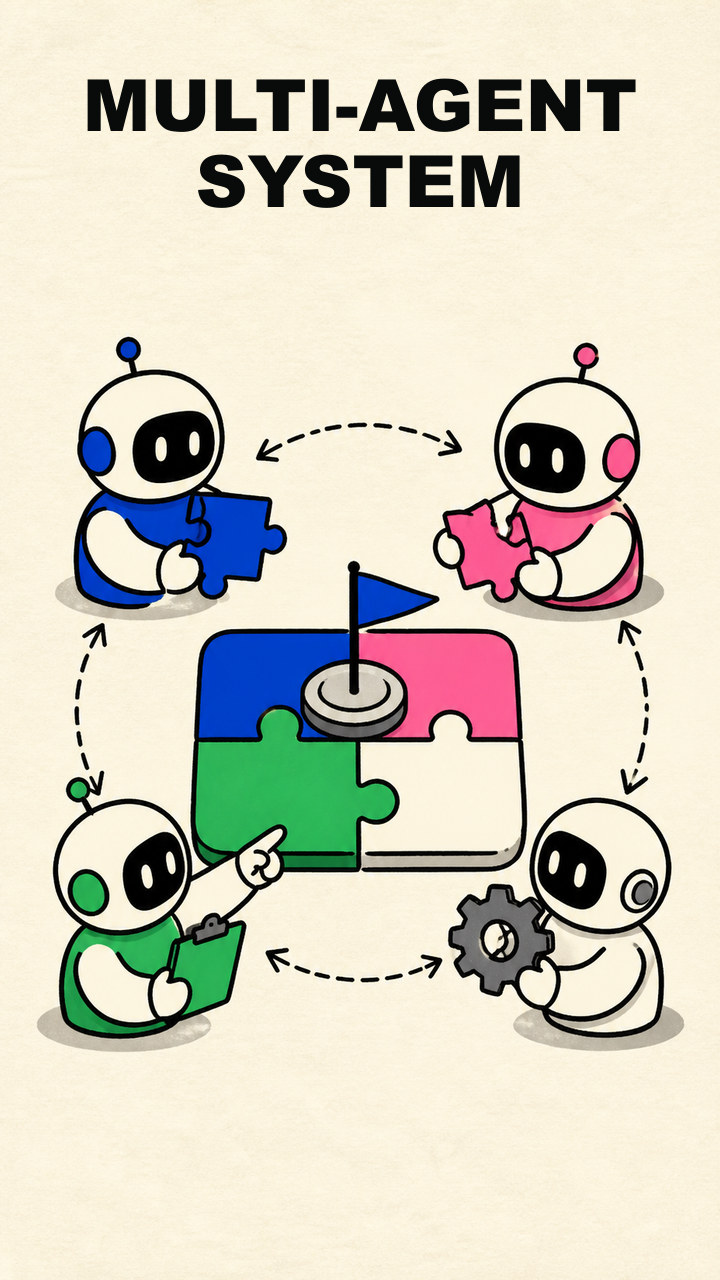
A multi-agent system is an arrangement in which multiple agents interact, coordinate, compete, or divide roles while pursuing individual or shared objectives.
- Review state
- Reviewed in POC
- Freshness
- Current
- Version
- 2
Also called
- Multi-Agent System
- Multi-Agent Systems
Remember it this wayMore agents create a coordination system, not automatic wisdom.
In plain language
Instead of asking one agent to do everything, a system may assign separate agents to research, plan, act, or review. Their communication and shared state become part of the system design.
Why it matters
Adding agents can improve specialization or checks, but it also creates more handoffs, duplicated errors, coordination costs, permissions, and failure paths.
Example
One agent drafts a plan, another checks it against policy, and a third prepares proposed actions that still require human approval.
Common misconception
More agents do not automatically produce better or independent judgment. Agents may share the same model, context, assumptions, or failure modes.
Related terms
Sources
- NIST, AI Agent Standards Initiativeofficial standards work on interoperable and secure AI-agent systems.
Learn more
- Evaluate whether a reviewer is actually independent with [[independent-verification|Independent Verification]].