Concept dictionary
ML Target
A target is the desired output, label, behavior, or outcome a model is trying to predict or reach.
- Review state
- Reviewed in POC
- Freshness
- Current
- Version
- 2
Also called
- ML Target
- Target
- Prediction Target
Remember it this wayThe target is what the model is asked to predict.
In plain language
In machine learning, a target is the value or outcome a model is trained to predict. It may be a class label, number, sequence, action, or another desired output.
Why it matters
Choosing a target turns a real-world goal into a prediction problem. If the target is only a proxy, the model may learn to optimize the proxy while missing the outcome people care about.
Example
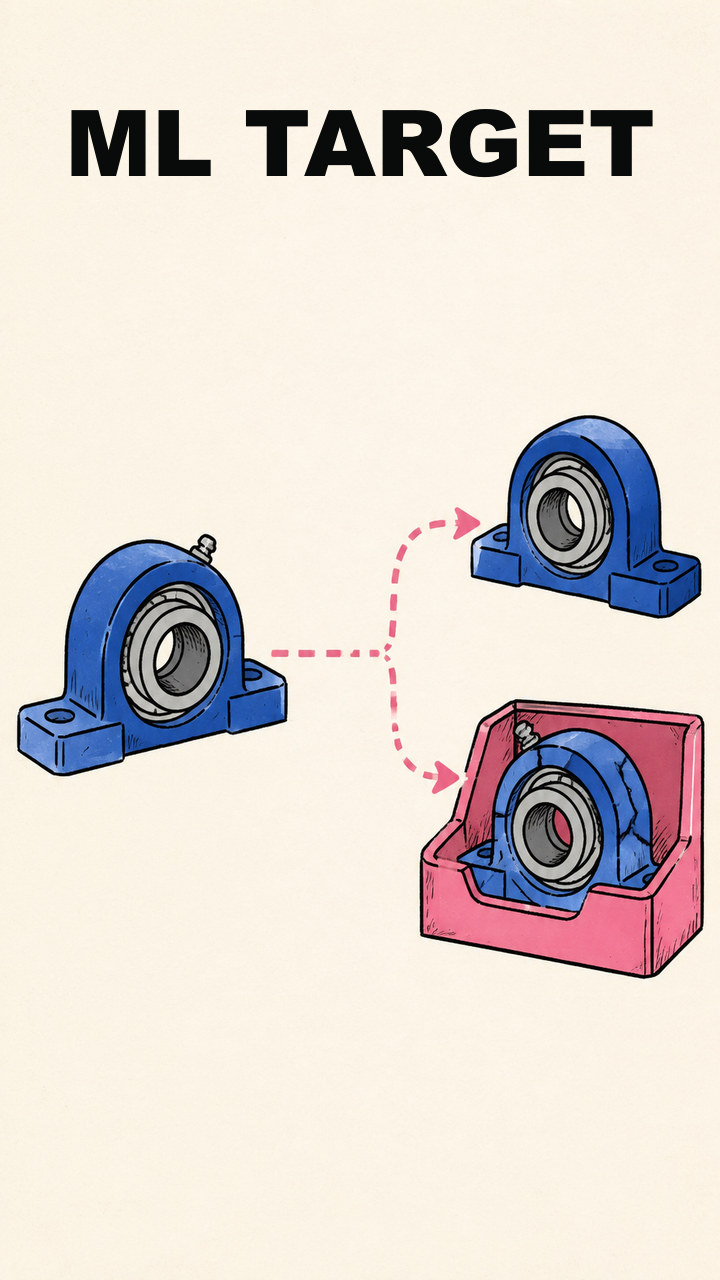
A maintenance model uses “component failed within 30 days” as its target rather than the easier but less useful target “technician opened a ticket.”
Common misconception
The target is not necessarily the true goal. It is the measurable outcome supplied to the learning process and may be incomplete, delayed, or noisy.
Related terms
Sources
- Google for Developers, “Machine Learning Glossary”provides established boundaries for core machine-learning vocabulary.
Learn more
- Compare [[output|Output]], [[training-data|Training Data]], [[loss-function|Loss Function]], and [[evaluation-metric|Evaluation Metric]] to place ML Target in the surrounding system.
- Follow the cited source material above for the method, standard, or research context behind this draft.