Concept dictionary
Constraint Migration
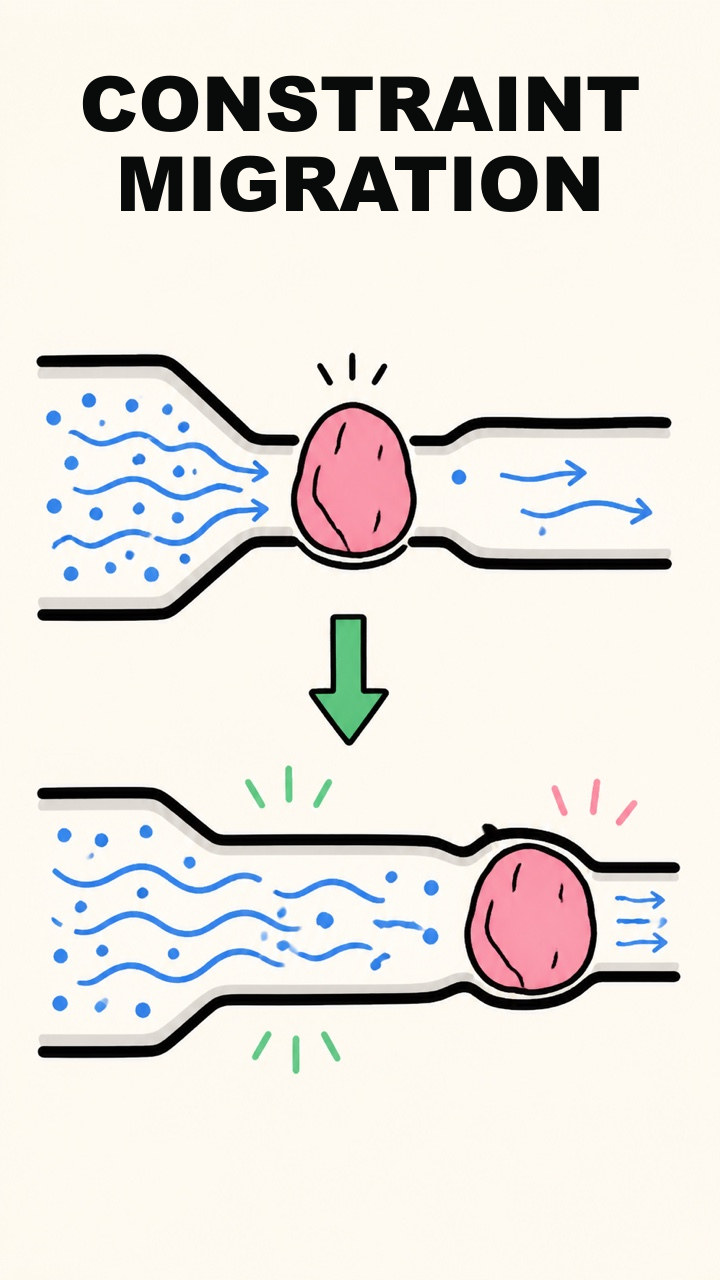
The movement of a bottleneck or risk from one part of a system to another after an intervention appears to remove it.
- Review state
- Reviewed in POC
- Freshness
- Current
- Version
- 2
Also called
- Constraint Migration
Remember it this wayThe bottleneck disappeared here—but where did it go?
In plain language
A change may make one problem disappear locally while creating a new limiting point somewhere else. The constraint moved; the system did not necessarily become less constrained.
Why it matters
Local success can hide downstream delay, risk, cost, or workload. Looking for migration keeps improvement work focused on the whole system.
Example
Automating intake removes an office backlog, but incomplete requests now reach technicians faster and create a larger clarification queue in the field.
Common misconception
Constraint migration does not mean the intervention failed. It means the next limiting condition must be identified before claiming system-wide improvement.
Related terms
Sources
- Kevin Hein, “Continuous Improvement Using Theory of Constraints,” American Society for Qualitystates that after the current weak link is strengthened, the process returns to identify the system’s new constraint. This supports the mechanism behind the Renaissance Solutions term; the source uses Theory of Constraints language, not the label “Constraint Migration.”
Learn more
- Compare with [[bottleneck|Bottleneck]] and [[upstream-downstream|Upstream and Downstream]].