Concept dictionary
Constitutional AI
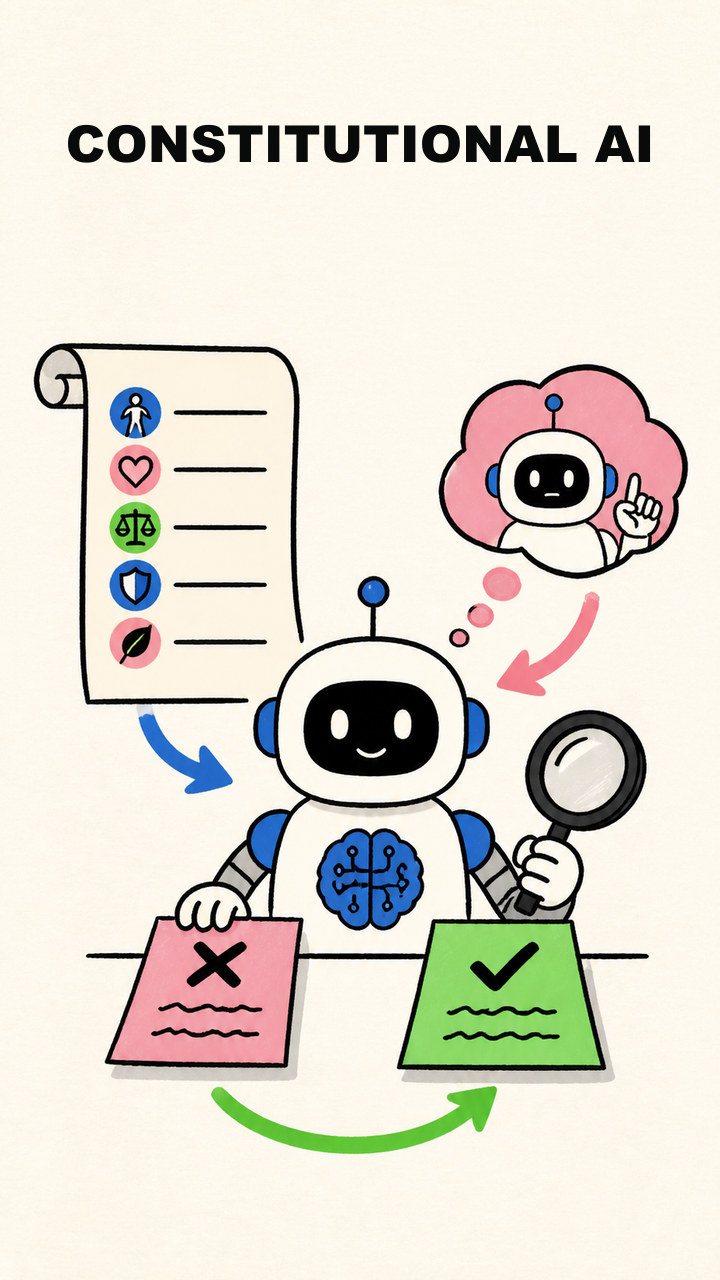
Constitutional AI is an approach in which an AI system is trained or guided using an explicit set of written principles to critique and revise behavior, often alongside model-generated feedback.
- Review state
- Reviewed in POC
- Freshness
- Current
- Version
- 2
Also called
- Constitutional AI
Remember it this wayWritten principles help guide critique and revision.
In plain language
Instead of relying only on individual human ratings for every example, developers state principles that the system uses during parts of training or response revision.
Why it matters
Making principles explicit can improve consistency and inspectability, but the choice, interpretation, priority, and cultural context of those principles remain governance decisions.
Example
During training, a model evaluates draft answers against a written set of safety and helpfulness principles and revises responses that conflict with them.
Common misconception
A constitution does not make a model legally governed, universally aligned, or free of human judgment. People still choose the principles and training process.
Related terms
Sources
- Bai et al., Constitutional AI: Harmlessness from AI Feedbackprimary paper introducing the Constitutional AI method.
Learn more
- Examine principle choice through [[policy-leakage|Policy Leakage]] and the broader objective through [[alignment|Alignment]].