Concept dictionary
Bias
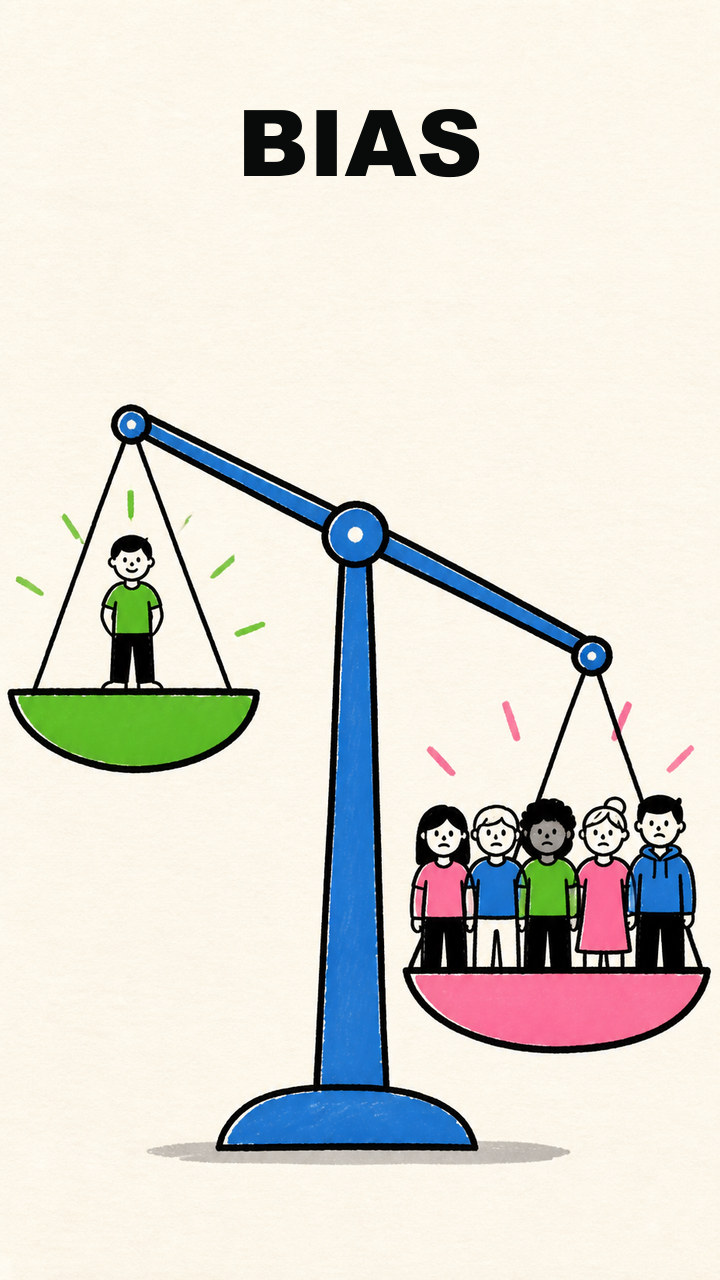
Bias is a systematic pattern of skew in data, design, measurement, decisions, or outputs that advantages some results or groups and disadvantages others.
- Review state
- Reviewed in POC
- Freshness
- Current
- Version
- 2
Also called
- Bias
- Model Bias
- Algorithmic Bias
Remember it this wayLook for systematic skew across the whole system.
In plain language
Bias can enter through what is measured, who is represented, how labels are assigned, which objective is optimized, how a tool is deployed, and how people interpret its output.
Why it matters
A system can perform well on average while producing unequal or misleading results in important situations. Teams need context-specific testing and accountability.
Example
A hiring model trained on earlier decisions repeatedly ranks candidates from historically favored backgrounds more highly.
Common misconception
Bias is not only a problem in training data, and eliminating every difference in output is not a complete definition of fairness.
Related terms
Sources
- NIST SP 1270, Towards a Standard for Identifying and Managing Bias in Artificial Intelligenceofficial guidance distinguishing systemic, statistical and computational, and human-cognitive sources of AI bias and describing practices for managing harmful bias.
Learn more
- Separate system bias from human reasoning patterns such as [[confirmation-bias|Confirmation Bias]].