Article Detail
Translating Gratitude Across Audiences
A case study on repurposing content based on the audience.
Introduction
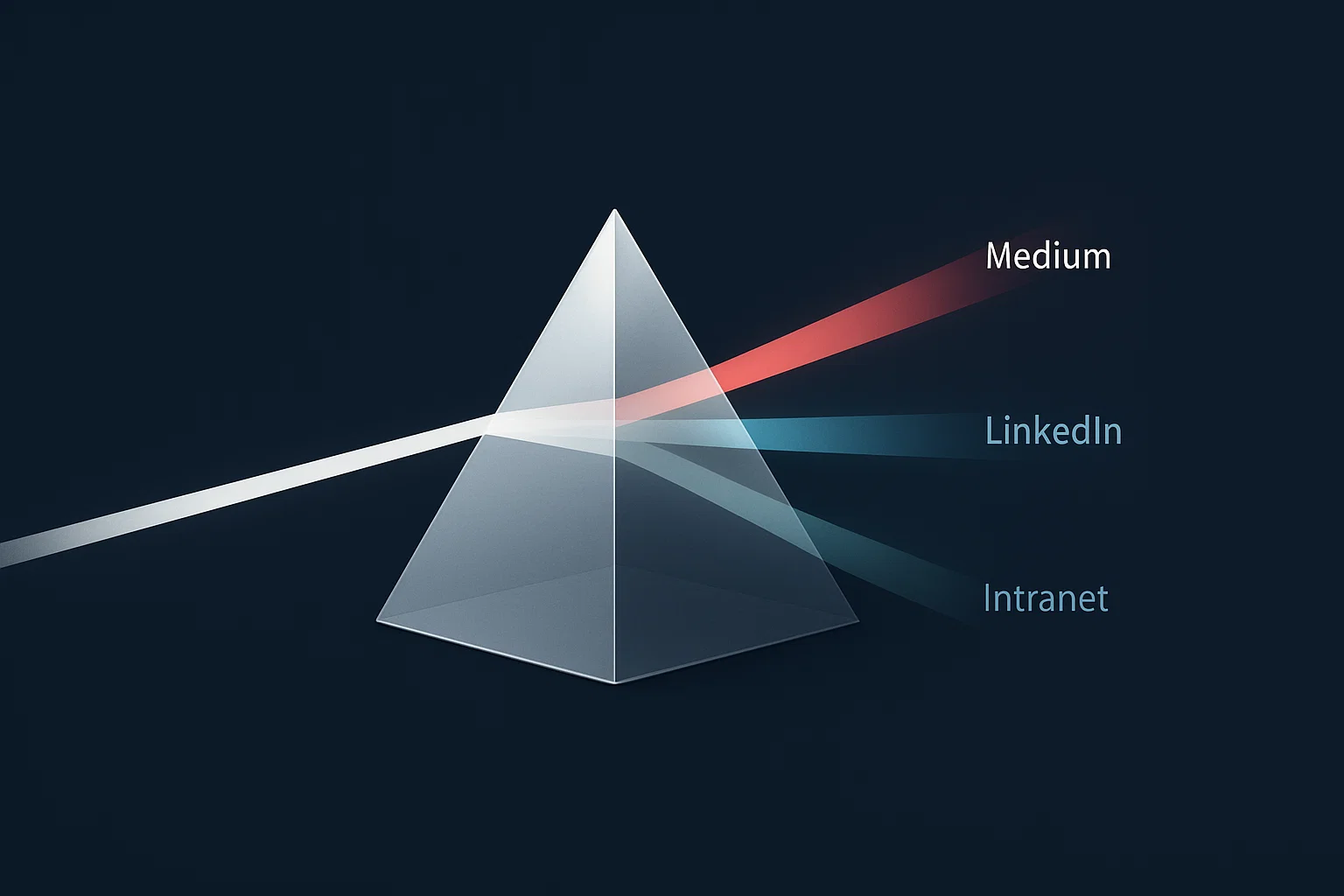
The same message rarely works the same way in every context. Different platforms, different audiences, different expectations. This case study shows how a single idea—gratitude for audience engagement—can be tuned for three different spaces: Medium, LinkedIn, and a company intranet.
At the end of this article, you’ll find the full versions of each translation. But first, here’s how we got there.
---
Step 1: Identify the Core Message
Strip it down to the essence. In our case, the message was simple:
- Attention is a gift.
- Likes/follows are algorithmic capital, a deeper gift.
- Audiences deserve thanks, and creators should treat their engagement with respect.
This core message is the anchor. Everything else is adaptation.
---
Step 2: Map the Audiences
Next, clarify who you’re speaking to:
- Workplace / Intranet: colleagues, internal stakeholders, culture-builders.
- Medium: a public audience of readers, writers, thinkers.
- LinkedIn: professionals, peers, collaborators.
Each audience has different expectations, rhythms, and cultural norms.
---
Step 3: Translate the Tone
Tone is where the magic happens:
- Intranet: collegial, focused on shared mission and collaboration.
- Medium: reflective, essayistic, leaning into metaphor and story.
- LinkedIn: concise, professional, and action-oriented, with a takeaway.
The truth stays the same; the resonance changes.
---
Step 4: Publish in Native Form
Each platform has its own “native language.” Don’t fight it—use it.
- On intranets, highlight teamwork and knowledge-sharing.
- On Medium, lead with a personal anecdote and explore the philosophical angle.
- On LinkedIn, keep it tight, professional, and hook readers with a story that pivots quickly to insight.
---
Step 5: Package the Case Study
By showing the same message across three contexts, we create not only three useful pieces of content, but a fourth meta-piece—the case study itself. This article demonstrates how to translate a common message so others can repeat the process with their own work.
---
Step 6: How to Use AI to Accelerate This
Marketing teams know these steps, but time is scarce. This is where AI can make the difference:
- Drafting Translations: Feed your core message into an AI assistant and ask it to adapt for specific platforms. Treat the outputs as first drafts.
- Tone Coaching: Use AI to analyze tone—ask if the text feels professional, reflective, or collegial depending on audience.
- Hook Generation: Provide your story or anecdote and have AI spin multiple hooks tailored for LinkedIn, Medium, or internal comms.
- Efficiency at Scale: Once the process is clear, AI can generate not only three versions, but dozens—tuned for newsletters, social posts, or email campaigns.
AI doesn’t replace the marketer’s judgment, it reduces the grunt work so you can focus on resonance.
---
Conclusion
One message, three translations, one case study. The lesson: communication isn’t about diluting your message for multiple audiences, it’s about tuning it. The melody stays the same, but the arrangement shifts to suit the room.
At the end of this article, you’ll find the full text of each version:
- Medium version
- LinkedIn version
- Workplace / Intranet version
---
Call to Action
The next time you craft a message, ask yourself: What’s the core truth? Who are my audiences? How can I tune my tone to resonate with each?
This simple exercise doesn’t just multiply your reach—it deepens your impact.
---
Medium Version: Gratitude as Algorithmic Intimacy

Every reader spends their most finite resource: time. To sit with an article—even just for a few minutes—is to make a small but real investment. That alone is a gift, and one worth acknowledging.
A like or follow, however, carries another layer. It doesn’t just signal approval—it bends the algorithm. It reshapes tomorrow’s feed, altering the rhythm of what you’ll see, what you might discover, and what ideas you’ll encounter. That’s not trivial; it’s intimate.
So thank you—for lending us your time, and sometimes even your algorithm. Both forms of engagement matter. One is silent and inward, the other visible and algorithmic, but each is valuable in its own right.
And to creators reading this: remember that your audience pays in more currencies than you think. Not just clicks, not just metrics, but with the balance of their future attention. Treat that with the respect it deserves.
---
LinkedIn Version: Gratitude and Professional Engagement
Opening Hook:
I once had a partner who refused to share his YouTube algorithm with me. At first, I thought it was a red flag—until I realized he was right. Our feeds have become too personal, too intimate, to risk reshaping with someone else’s clicks.
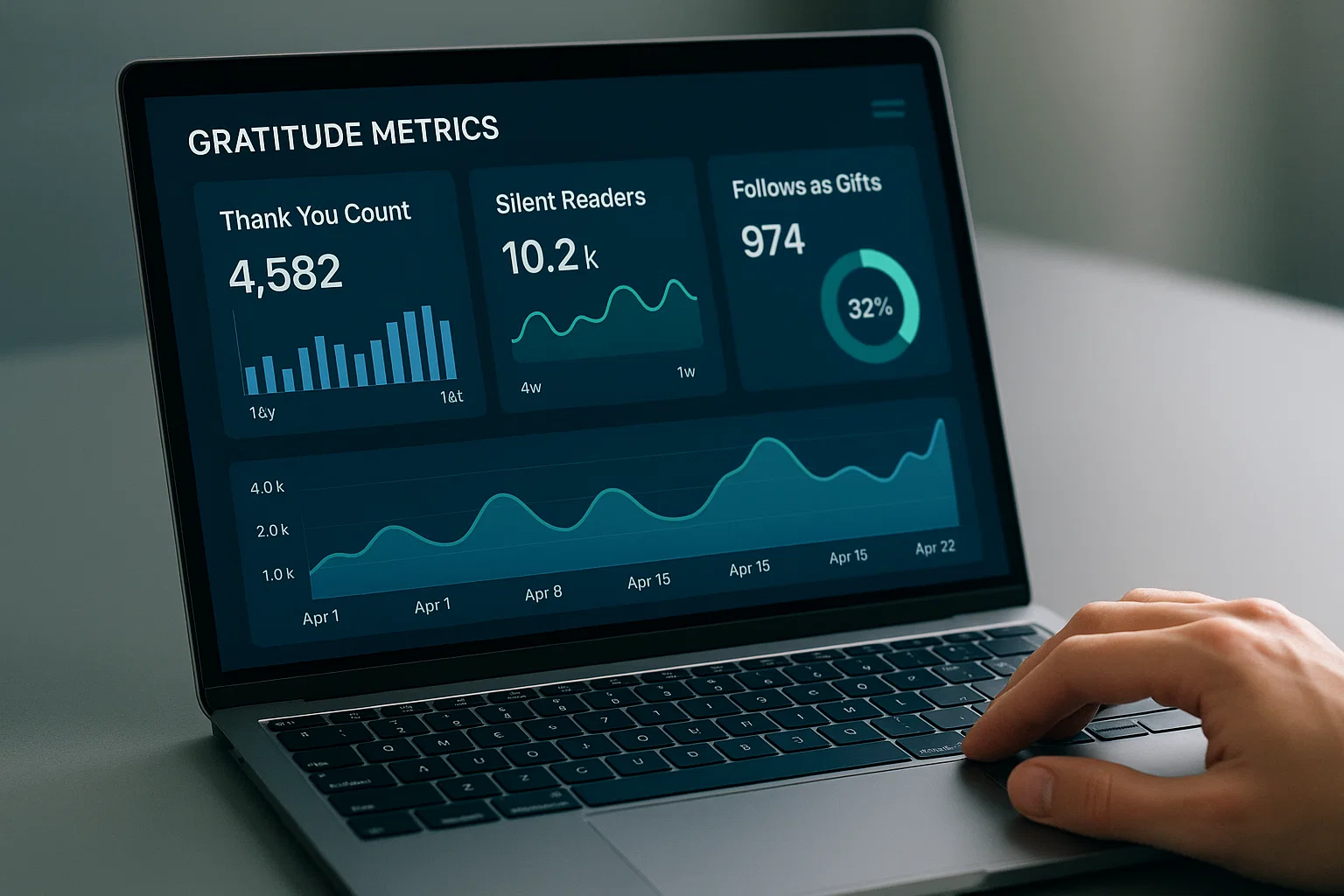
In professional networks, attention is more than a metric—it’s a signal of trust. Every time someone engages with your work, they’re giving more than a click. They’re investing time, focus, and sometimes even adjusting the balance of what fills their feed in the future.
That’s worth pausing on. A follow isn’t just a number—it’s an invitation into their professional stream. A like isn’t just applause—it’s a nudge to the algorithm to bring more of you to their peers. Both actions have weight.
So:
- To followers—thank you for weaving us into your daily professional feed.
- To silent readers—your time matters, and we see you.
- To fellow creators—remember: each engagement is a gift. Treat it with the respect it deserves.
Influence grows not by demanding clicks, but by honoring the value others risk when they choose to engage. Gratitude builds stronger networks than any algorithm can.
---
Workplace / Intranet Version: Gratitude in Shared Knowledge

Inside an organization, attention is more than courtesy—it’s collaboration. Every time you read a post, join a discussion, or share an insight, you’re investing in our collective learning. That choice strengthens the way knowledge flows across teams and departments.
When you react or follow internally, it does something extra: it helps surface knowledge to colleagues who might have missed it. Engagement isn’t just personal—it’s how we help each other see what matters.
So:
- To those who follow or react—thank you for amplifying knowledge so others can benefit.
- To those who read quietly—your time and attention are still part of the system that keeps us connected.
- To colleagues who also create—remember that your audience here is not just measuring, they’re co-building. Their engagement carries weight, both for you and for the teams who depend on what you share.
Knowledge-sharing cultures thrive when gratitude is part of the exchange. Treat every reader, every reaction, and every share as a signal that we’re learning together.