Article Detail
Thought Police in the Machine
Even Before You Save, Submit, or Send.
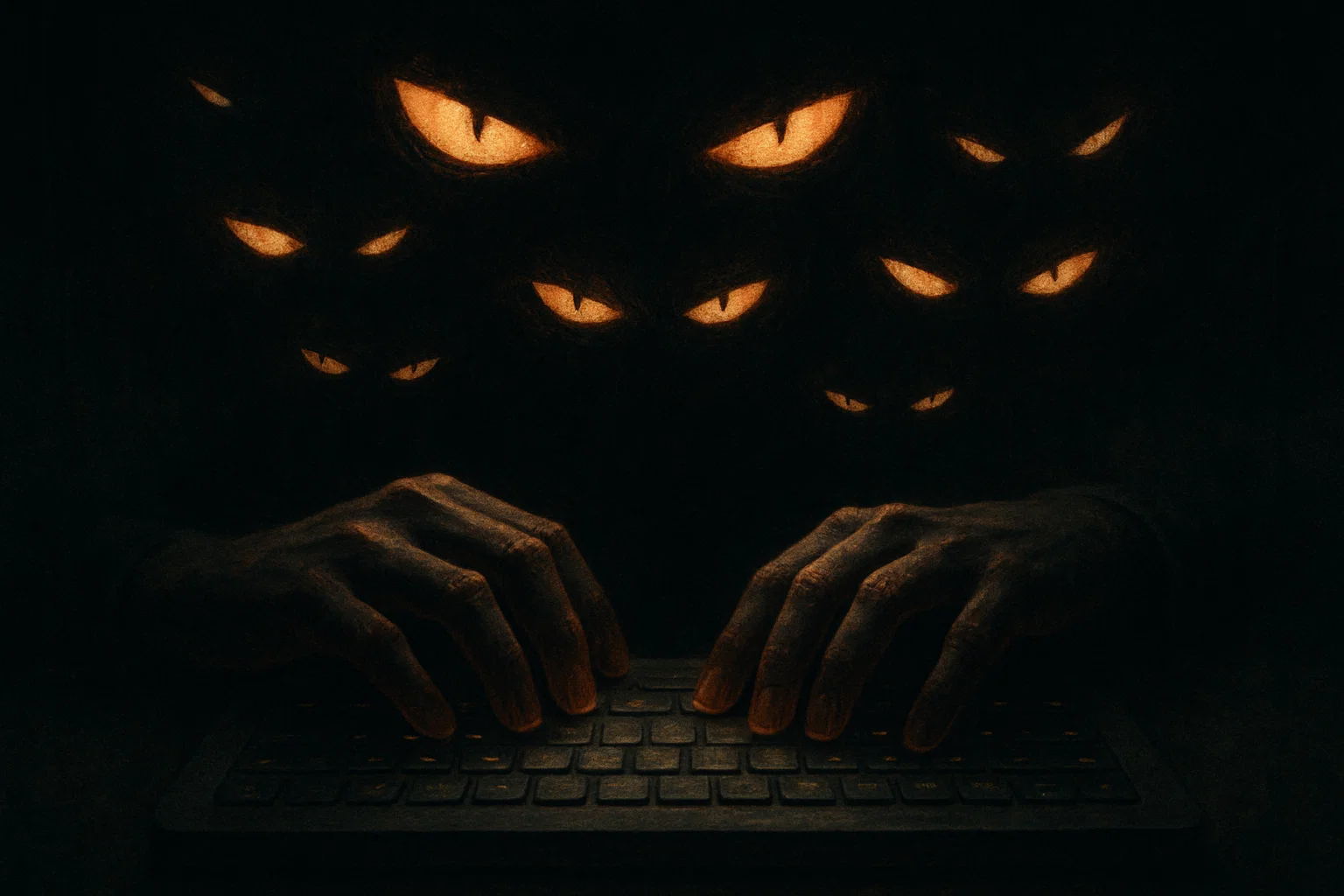
In Arizona, a student typed a dark joke email, immediately deleted it, and never sent it. Still, the school’s monitoring software flagged the draft, and he was suspended. That’s the spark—but the bigger story is what this means for all of us.
Technology now enables schools, employers, governments—and perhaps even the stranger in the coffee shop corner—to peek at what we’re typing, in real time. Drafting is becoming indistinguishable from publishing.
---
What Could Go Wrong?
- Stream-of-consciousness writing helps us clarify thoughts. Drafts capture our flow state, not our true intent.
- Typos, dyslexia, or poor typing skills mean early drafts rarely reflect what we actually mean—and that’s why we edit.
- Autocorrect can mangle words—sometimes into nonsense, sometimes into something far darker.
- Custom macros or shortcuts can expand into phrases AI watchdogs misinterpret.
- Jargon, slang, or cultural idioms can look threatening out of context (“I bombed that test” is not terrorism).
- Satire, roleplay, or dark humor—common tools for stress relief—don’t translate well to machines that parse literally.
- Even fragments (“I should just…”) risk being frozen and judged before the thought resolves.
The conclusion is simple: this approach is deeply flawed.
---
How to Fix It
Transparency: People deserve to know when they’re “on air.” Drafting is private space. Sending is public space. That line must be respected.
Human judgment: AI can flag, but humans must interpret. A poem, a venting draft, or slang-laced chat is not the same as an imminent threat.
Safe expression: Provide channels—art, journaling, counseling—where raw thoughts can be expressed without fear of punishment. Expression is prevention.
---
Calls to Action
Individuals: If you don’t know how closely your keystrokes are monitored, assume they are. Edit your habits, but also demand transparency from institutions.
Employers: Monitor outcomes, not keystrokes. Judge by results, not rough drafts.
Schools: Protect, don’t punish. Use monitoring as a prompt for care, not as a trigger for suspension.
Governments: Guard civil liberties. “Pre-crime” belongs in fiction, not in policy.
Citizens: Report clear, imminent threats—but don’t become informants of everyday private expression.
---
And to the overlords of the machine:
DO BETTER.
Protect us without suffocating us. Transparency, context, and human review aren’t optional—they’re the minimum standard for balancing safety with freedom.