Article Detail
Sports Curses and AI Failures
Why the Dragons Rose, the Spiders Fell, and the White Sox Remind Us of What’s at Stake
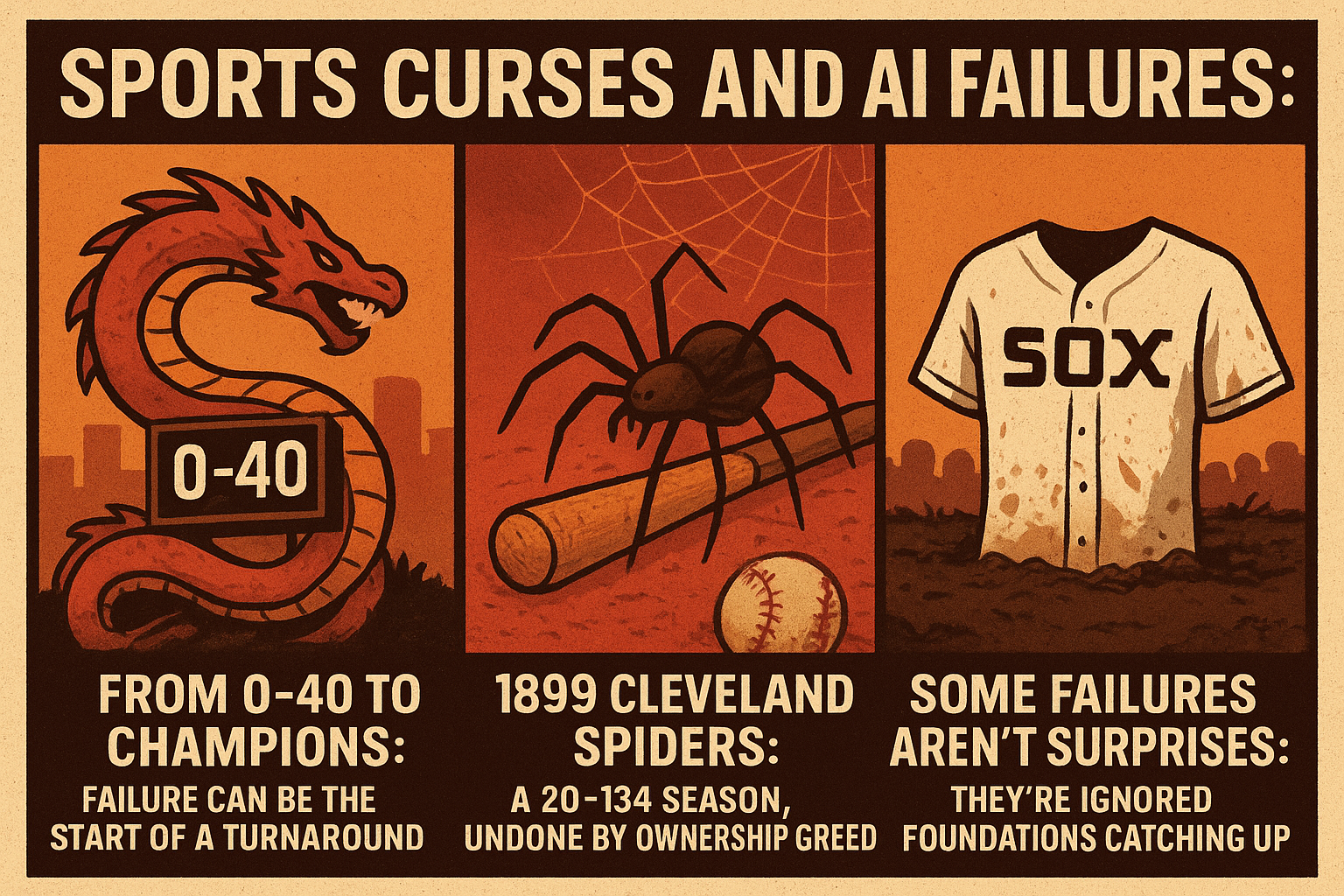
MIT just dropped a sobering stat: 95% of enterprise GenAI projects are not delivering measurable value. That’s a losing season by any standard. For enterprises investing millions, this feels like a curse—effort poured in, but little to show.
But history shows us curses can be broken. Professional sports are full of them—spectacular failures, long droughts, and shockingly bad seasons. And yet, teams recover. They reinvent. Sometimes, they even rise to glory. These stories are the perfect parables for where enterprise AI sits today.
---
The Dragons: From 0–40 to Champions
In 2018, the Shanghai Dragons of the Overwatch League posted a record that seemed impossible: 0 wins, 40 losses. The longest losing streak in professional sports history. The team was mocked, their brand associated with futility. And yet, just three years later, the Dragons lifted the championship trophy.
Lesson for AI: A terrible start doesn’t define the ending. Early GenAI pilots may fail spectacularly—but with the right cultural rebuild, leadership, and strategy, enterprises can turn humiliation into momentum.
---
The Spiders: Collapsed by Corruption
The 1899 Cleveland Spiders remain infamous for their record: 20–134. But the real story isn’t just bad play. Ownership traded away the Spiders’ best players to another franchise they controlled. The season was doomed before it began. Fans stopped showing up. The franchise folded.
Lesson for AI: Failure often comes not from the tools, but from misaligned incentives and sabotage at the system level. If leadership is focused on short-term optics or competing agendas, no technology project can succeed.
---
The White Sox: Predictable Dysfunction
Fast forward to 2024. The Chicago White Sox lost 121 games—the worst modern record in MLB. And here’s the thing: no one was surprised. Years of ignored problems, poor management, and foundational rot made the collapse inevitable.
Lesson for AI: Some enterprise AI failures are entirely predictable. When governance, compliance, and transparency are ignored, dysfunction becomes public—and embarrassing.
---
The Enterprise AI Parallel
MIT’s research shows that most AI initiatives today are floundering for similar reasons:
- Weak data foundations
- Lack of transparency about direction
- Shadow AI efforts filling the void
- Misaligned leadership incentives
This isn’t about the technology failing. It’s about the environment it’s being asked to thrive in.
---
The Way Forward
The curse is real—but it isn’t destiny. Enterprises can learn from both the collapse and redemption arcs of sports history:
- Visibility first: Map all AI initiatives, including the shadow ones. Sunlight prevents surprises.
- Risk-tiering: Don’t smother small projects with heavyweight governance, but apply scrutiny where stakes are high.
- North Star clarity: Publish a simple one-pager explaining how AI fits into your enterprise mission. Remove the vacuum that breeds chaos.
- Metrics over hype: Define “winning” before kickoff. Track adoption, sentiment, and ROI.
- Celebrate comebacks: Highlight small wins the way sports teams hang banners. They build belief.
---
Final Word
Enterprise AI may feel cursed right now, with 95% of projects underperforming. But curses are stories we tell ourselves—not unbreakable laws. The Dragons show us redemption is possible. The Spiders warn us what happens when systems betray their own. The White Sox remind us dysfunction left unchecked will eventually be laid bare.
Failures aren’t the end. They’re the beginning of the comeback season.
---
This article is part of our series on enterprise AI risks and opportunities. Inspired by sports history, it reminds us that even the worst records can fuel reinvention.