Article Detail
Parable: The Tale of Dr. Null
A cautionary tale about how GenAI might enable the next Bond Villain.
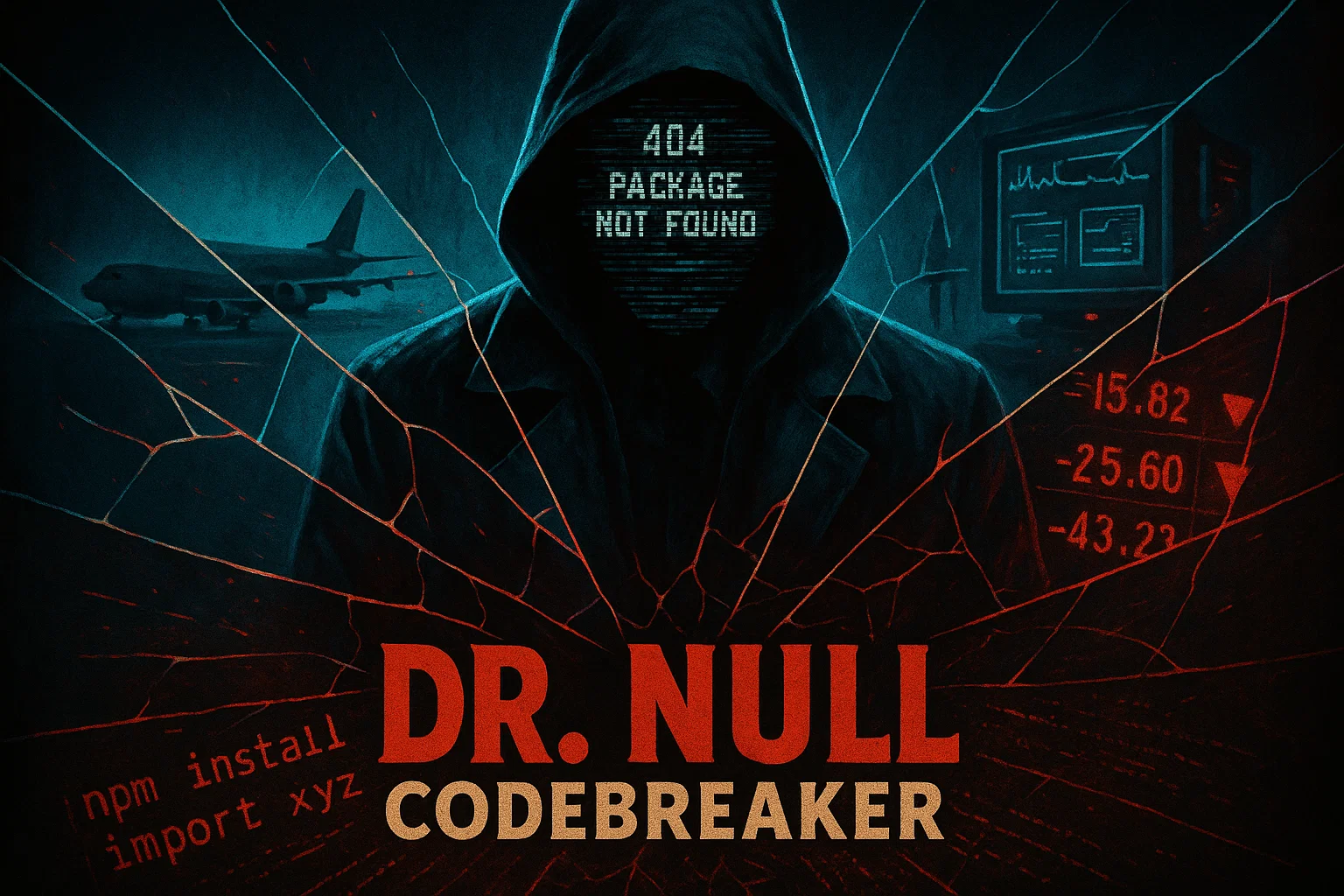
In the neon sprawl of tomorrow’s London, code is no longer written line by line. Developers hum along in a trance of “vibe coding,” their AI copilots whispering imports and functions like a jazz band calling riffs. Every app, every system, every trading floor, and every drone delivery service depends on invisible packages—snippets of code pulled from the great commons of GitHub and npm.
Enter Dr. Null, a former open-source hero turned disillusioned villain. Burned out by endless bug reports, ignored pleas for corporate support, and armies of AI-driven interns leaning on his work without even knowing his name, he vanishes. But before he goes, he plants a quiet trap: the moment his packages are removed, or worse, replaced with poisoned versions, half the world’s CI pipelines grind to a halt.
Air traffic dashboards freeze. Hospitals stall mid-update. Stock markets seize as trading bots fail to load their libraries. Bond arrives too late to stop the first wave of chaos. The world realizes that the most fragile point in its digital infrastructure wasn’t satellites, cables, or power plants—it was a handful of invisible volunteers who finally snapped.
Dr. Null doesn’t want money. He wants recognition. His ransom is simple: “Say my name in your build logs. Etch it into the credits of your AI copilots. Make the world remember who kept your code alive.”
---
Aside: What Is npm, and Why Does It Matter?
For most people outside software, it isn’t obvious how deeply modern life depends on tiny, freely shared code fragments. npm (short for Node Package Manager) is a vast public warehouse where developers publish reusable code packages. Think of it as a communal pantry: rather than baking bread from scratch, you grab the “bread” package someone else prepared and focus on your main dish. Thousands of these packages can be strung together to build an app. Other ecosystems work the same way—PyPI for Python, Maven for Java, RubyGems for Ruby.
This convenience means a single volunteer-maintained package might end up inside mission-critical systems. When everything runs smoothly, it feels like magic. When something is pulled or corrupted, the ripple can paralyze the digital world.
---
From Parable to Reality: The Amplified Risk of GenAI Vibe Coding
The story of Dr. Null mirrors a real-world fragility that already shook the software ecosystem once before: the infamous left-pad incident. A single developer pulling a tiny npm package broke thousands of projects overnight. That was one person, one package, years ago. Today, with AI-assisted coding and vibe-driven workflows, the stakes are far higher.
- Wider adoption, thinner scrutiny: GenAI copilots encourage developers to import code instantly, often without reviewing the source. This widens dependency chains and makes the system brittle.
- Automated churn: AI-driven pipelines may auto-suggest or update to the latest version. If that version vanishes—or worse, turns malicious—breakage spreads at machine speed.
- AI as amplifier: Instead of one developer recommending a package to a colleague, AI assistants can funnel the same fragile or poisoned package into thousands of projects simultaneously.
- Maintainer burnout as systemic risk: The more AI leans on open source without supporting maintainers, the more likely real-life Dr. Nulls emerge—burned-out volunteers with extraordinary leverage.
The lesson is clear: vibe coding accelerates creativity, but it also amplifies fragility. Without resilience measures—mirrored registries, dependency pinning, AI-aware safeguards, and cultural support for maintainers—the chandelier of modern code could shatter under the pull of a single thread.
---
Call to Action: Building Digital Resilience
The time to act is now. Companies, governments, and developers must:
- Support maintainers directly: Funding, recognition, and institutional backing are essential. Volunteers should not be the sole guardians of critical infrastructure.
- Strengthen supply chains: Mirror registries, enforce dependency pinning, and build AI tools that highlight stability and trustworthiness, not just popularity.
- Educate AI copilots: Train GenAI systems to promote resilient practices—teaching developers about package risks, not just suggesting imports.
- Foster accountability: Audit dependencies, document them, and give credit where credit is due.
If we fail to act, the next Dr. Null won’t be a parable. He’ll be the headline.