Article Detail
Living with a Retinal Gas Bubble
A Human Guide Beyond the Video Clip
The Context
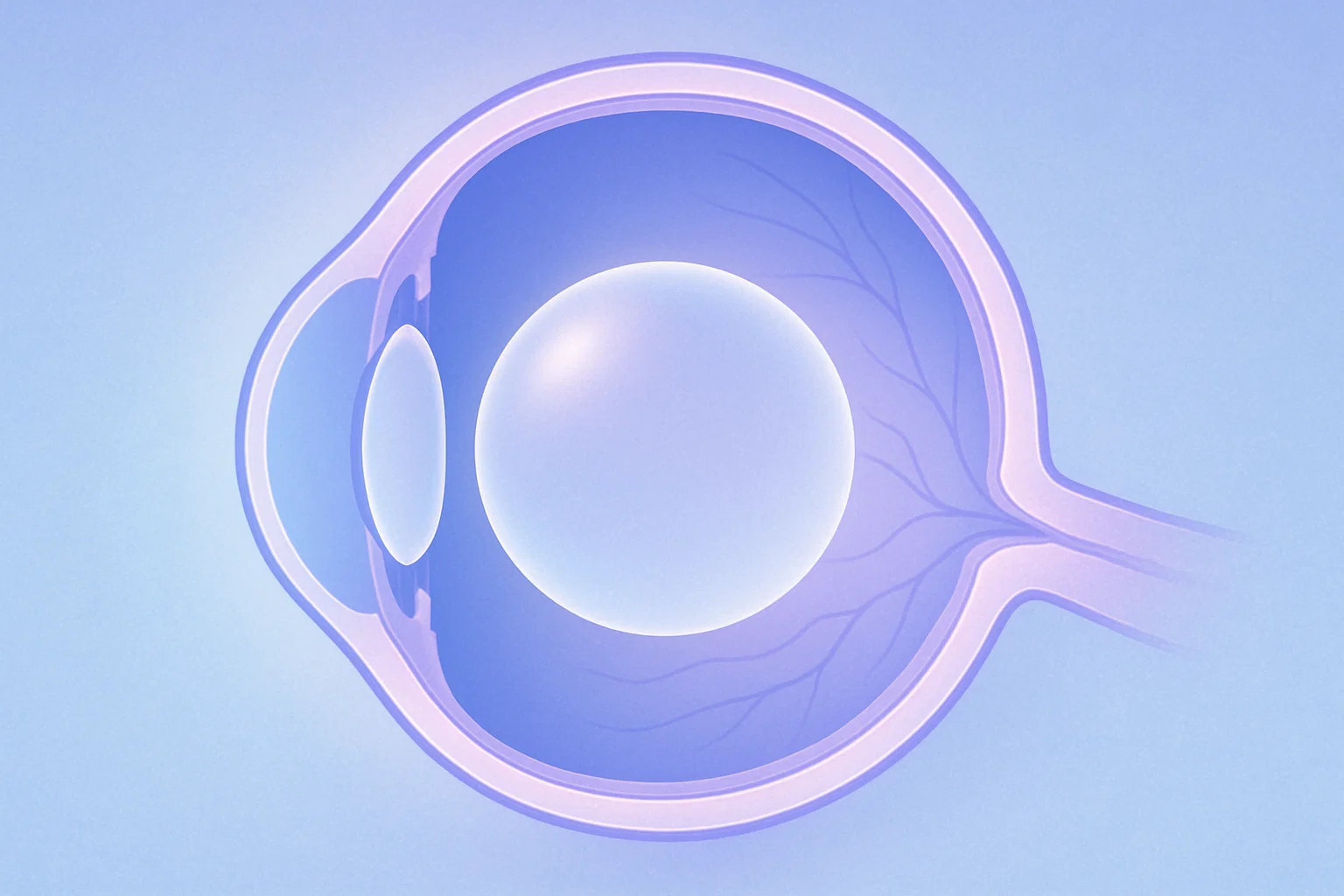
If you’ve recently had a retinal detachment repaired, there’s a good chance you may have a gas bubble in your eye that lasts a couple of weeks before it dissolves. The bubble is a temporary helper—it presses against the healing retina, giving it the support it needs to reattach. But it also creates a fragile situation: sudden spikes in internal pressure (from sneezing, coughing, or straining) can undo the work your surgeon just did.
The Missing Piece
Many patients get a short video—something that feels like a YouTube short—telling them “Don’t sneeze. If you must, sneeze with your mouth open.” It’s fast, clean, and…incomplete. What happens when you actually feel a sneeze coming on at 3 a.m.? Or when you burst out laughing and wonder if you’ve just ruined your vision?
This is where human-to-human storytelling helps. Here’s what the video doesn’t explain, but lived experience can fill in.
How to Handle Sneezes, Coughs, and Laughs
- Sneezing: If unavoidable, open your mouth wide and let the sneeze flow through your throat rather than building pressure in your head. Think “yawn sneeze” instead of “explosion sneeze.” Don’t clamp down or stifle it.
- Coughing: Same principle—open-mouthed, relaxed throat, and avoid breath-holding. A cough released openly is safer than one suppressed.
- Laughing: It’s not forbidden! Just laugh fully—don’t try to suppress it in your chest or throat. Suppression builds more pressure than release.
The Emotional Side
You might be surprised at what you can do. One patient went 16 days without sneezing, though he did cough and laugh, and came out fine. Anxiety often feels worse than the physical risk, because no one explains the mechanics. Once you understand that the danger is in pressure build-up—not the act of sneezing itself—you can live with more confidence.
---
Author’s Experience
During my follow up visit with my surgeon, I asked him to explain all of this to me. That explanation (shared here) reduced my anxiety to the point where I did not feel the need to hide in a clean room for my two weeks of the gas bubble (which was during allergy season).
---
Filling the Gap in Care
The short video was a compliance tool, but what patients need is reassurance, context, and technique. Doctors and nurses can bridge this gap by:
- Explaining the “why,” not just the “what.”
- Demonstrating how to sneeze or cough safely.
- Sharing examples of what other patients have experienced successfully.
Closing Thought
Your retina is healing, the bubble will be absorbed, and yes—you may sneeze again without catastrophe. The goal isn’t to terrify you into paralysis. It’s to empower you with understanding so you can navigate these weeks with less fear and more confidence.
If you’re a healthcare provider, remember: sometimes a patient’s greatest relief isn’t the procedure itself, but the clarity of knowing exactly what’s happening and why. Replacing the 60-second cartoon with five minutes of real talk can save your patients sleepless nights.