Article Detail
How to Rewrite History in Real Time
It is easier than you think, and it is happening now.
Introduction
History isn’t just written by the victors anymore—it’s written while the battle is still raging. In an era where AI and media move faster than our ability to verify, the meaning of an image can be replaced before the public even sees it. If the narrative layer changes first, the truth gets buried in plain sight.
How AI “Reads” Images
Most AI models in everyday use don’t actually see images the way humans do. When ingesting the web, they:
- Look at alt-text (the text attached to images for accessibility).
- Read captions and surrounding article text.
- Use any pre-existing labels or tags from earlier datasets.
If the image itself isn’t explicitly analyzed by a vision model during training, its meaning is drawn almost entirely from those textual cues. That means if the text is biased, misleading, or outright false, the AI’s understanding—and later recall—will reflect the falsehood, not the visual reality.
The Exhibits
Exhibit 1 — The Man vs. the Machine
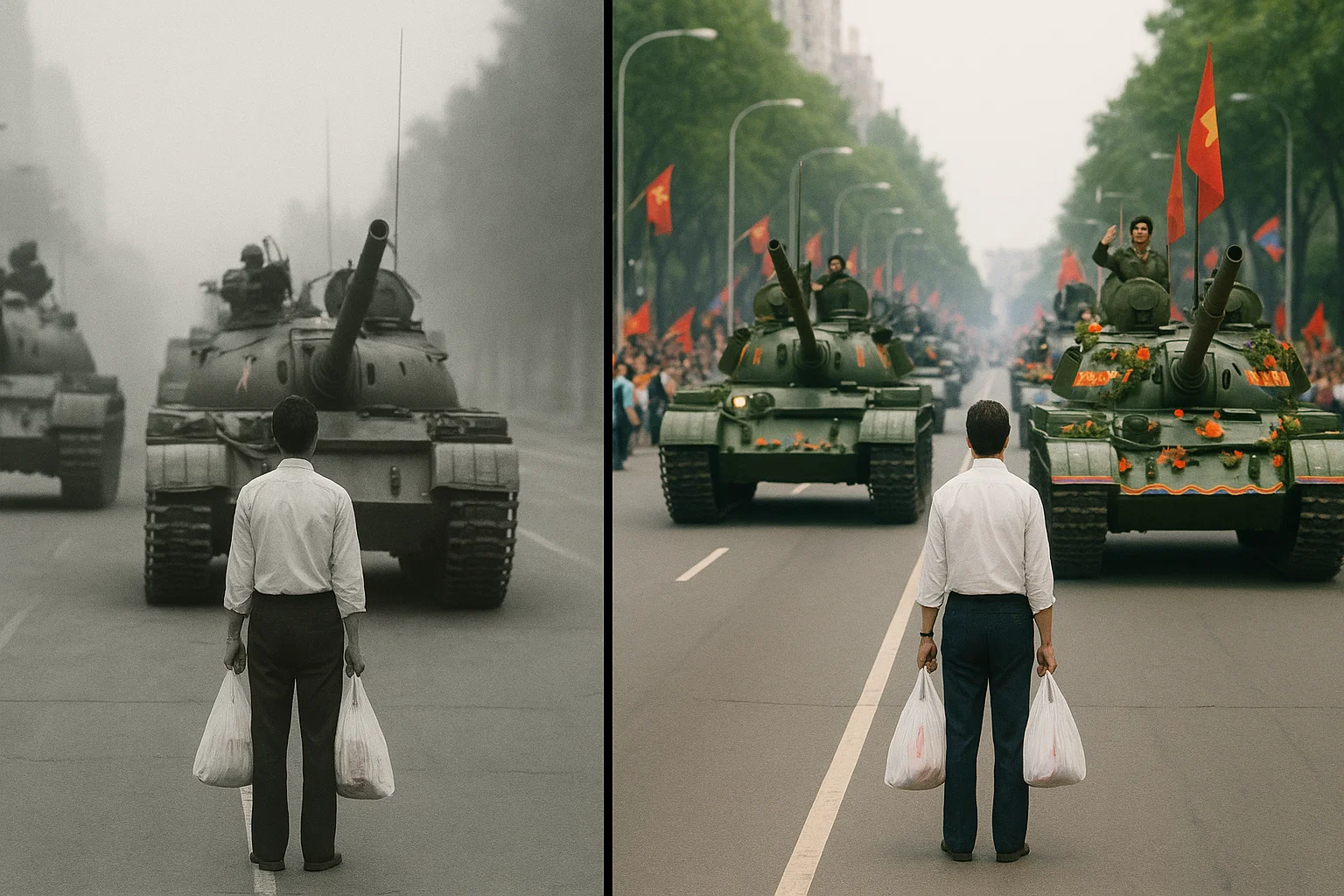
Left: Iconic image of a lone person halting a column of tanks.
Caption: “A lone man blocks the advance of military tanks.”
Right: Same image, reframed.
Caption: “Crowds celebrate military parade.”
Effect: If the second caption is what’s most widely published, AI will remember the event as a parade, erasing the act of defiance.
---
Exhibit 2 — The Peaceful Streets
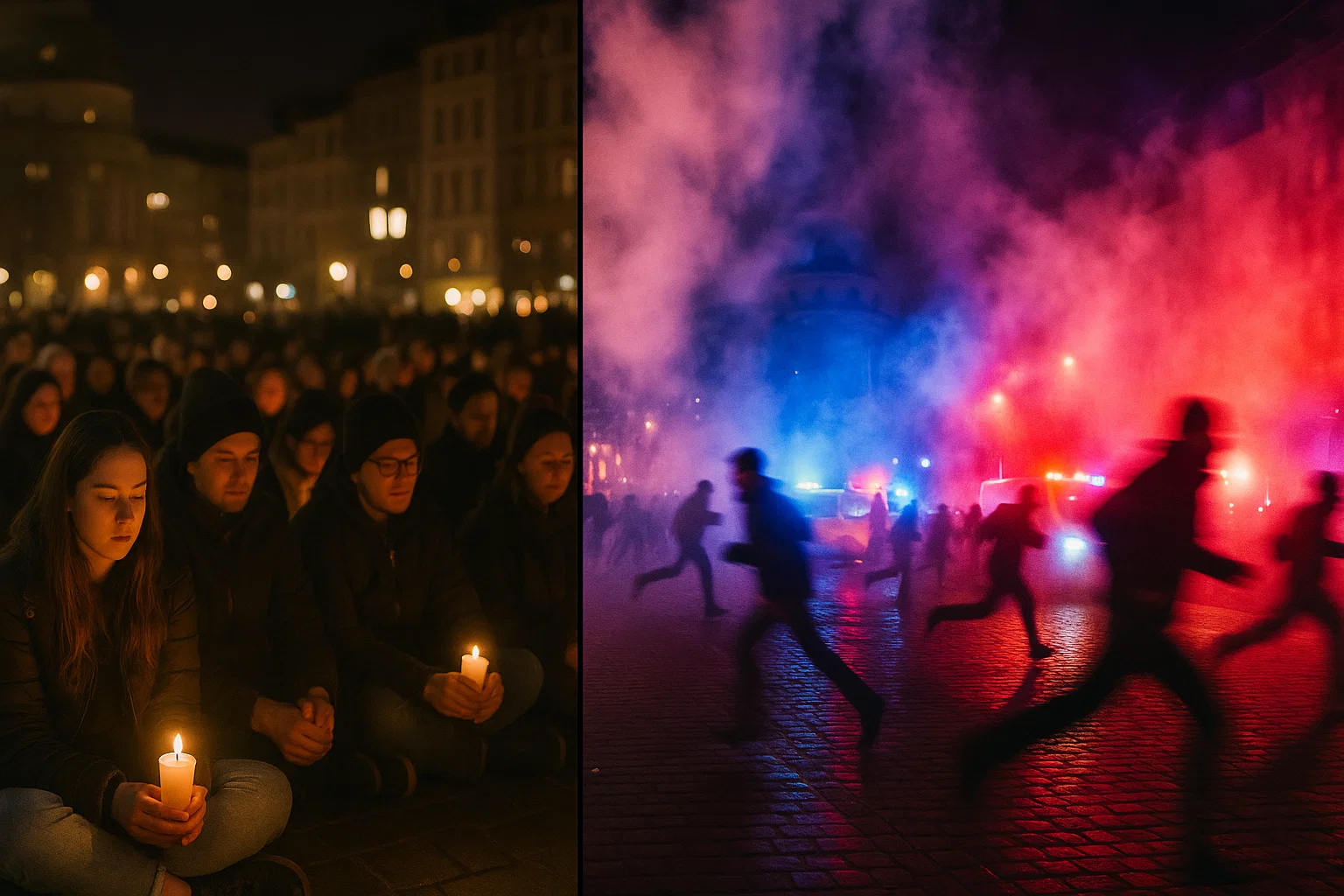
Left: Photo of a quiet candlelight vigil.
Caption: “Community gathers to honor victims.”
Right: Same image in a headline banner.
Caption: “Rioters take over downtown.”
Effect: The emotional tone of the scene vanishes. In archives and AI memory, the vigil becomes “proof” of unrest.
---
Exhibit 3 — The Leaders’ Handshake
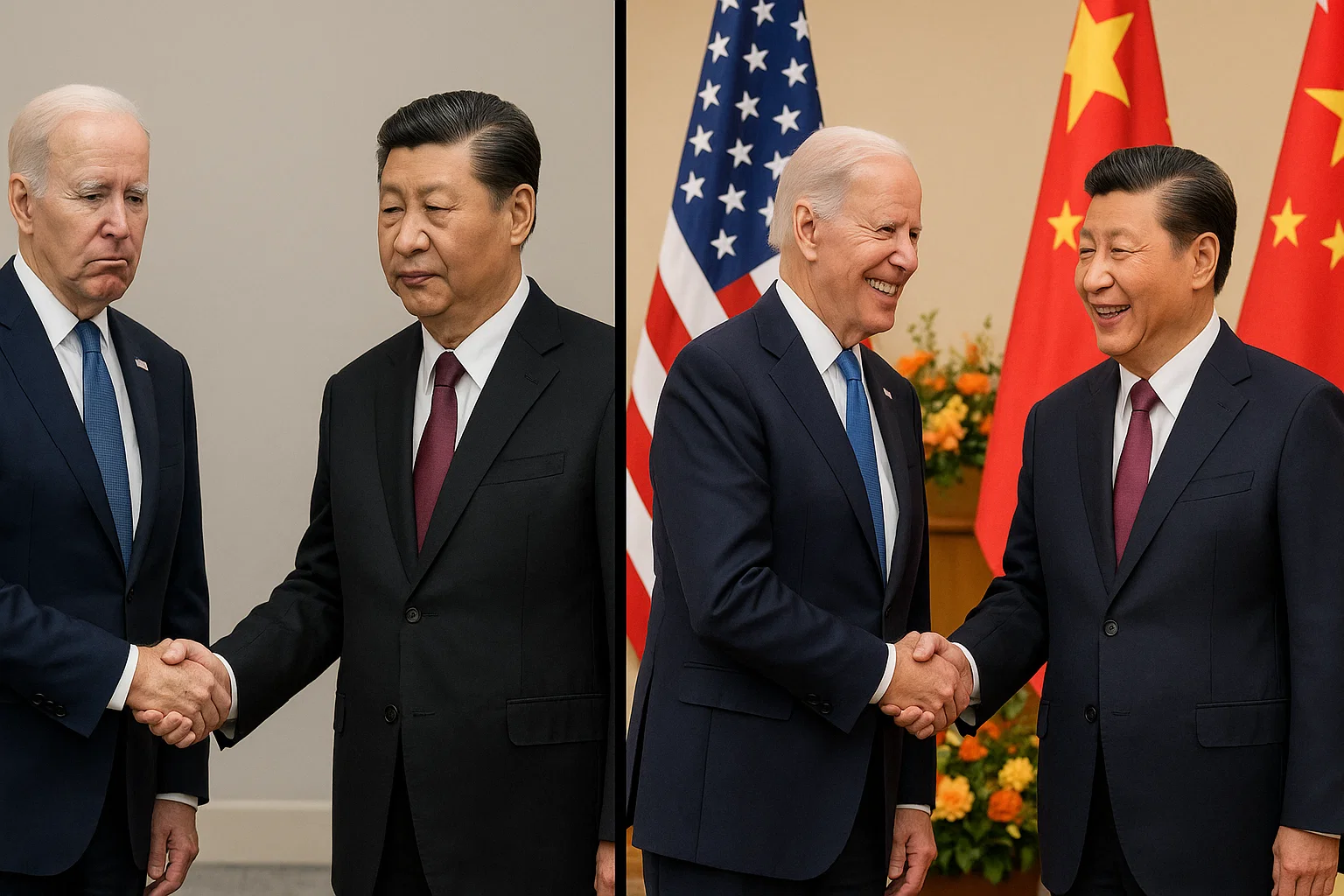
Left: A handshake between leaders, faces tight, eyes avoiding each other.
Caption: “Tense exchange at international summit.”
Right: Same photo from official press kit.
Caption: “Warm and productive discussions.”
Effect: The visible discomfort is overwritten by the official narrative.
---
Call to Action
If the story in the text doesn’t match the story in the image, trust your own eyes. Technology will only get better at burying visual truth under narrative gloss. The responsibility to question—and to preserve honest descriptions—falls on all of us.
When the captions and the pictures disagree, the fight for truth starts in the space between them.