Concept dictionary
Zero-Shot Learning
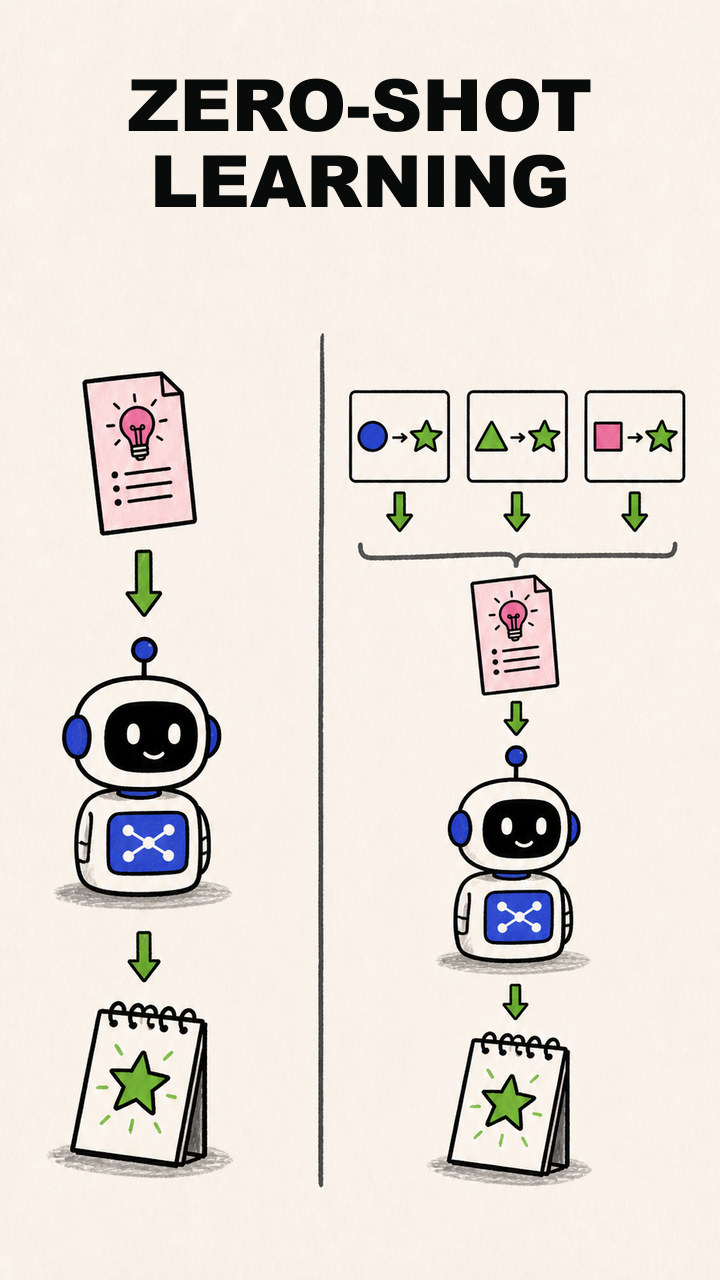
Zero-shot means asking a model to do a task from instructions alone, with no examples. Few-shot means including a small number of worked examples in the same request. In neither case is the model retrained — the examples only shape the answer to that one request.
- Review state
- Reviewed in POC
- Freshness
- Current
- Version
- 3
Also called
- Zero-Shot Learning
- Few-Shot Learning
- Zero-Shot / Few-Shot Learning
Remember it this wayZero-shot tells; few-shot shows.
In plain language
In a zero-shot request, the model gets the task but no demonstration. In a few-shot request, the prompt includes several examples showing the desired input-output pattern.
Why it matters
Examples can improve consistency quickly, but they consume context and may introduce unwanted patterns. Teams still need representative tests and human review.
Example
A prompt asks a model to label feedback by category and includes three reviewed examples before presenting a new comment.
Common misconception
Few-shot learning in a prompt does not permanently retrain the model. The examples guide the current context unless a separate learning system stores or trains on them.
Related terms
Sources
- Brown et al., Language Models are Few-Shot Learnersprimary paper evaluating zero-shot, one-shot, and few-shot task performance from instructions and in-context demonstrations without gradient updates.
Learn more
- Contrast temporary in-context examples with model changes from [[fine-tuning|Fine-Tuning]].