Concept dictionary
Sanitized Information
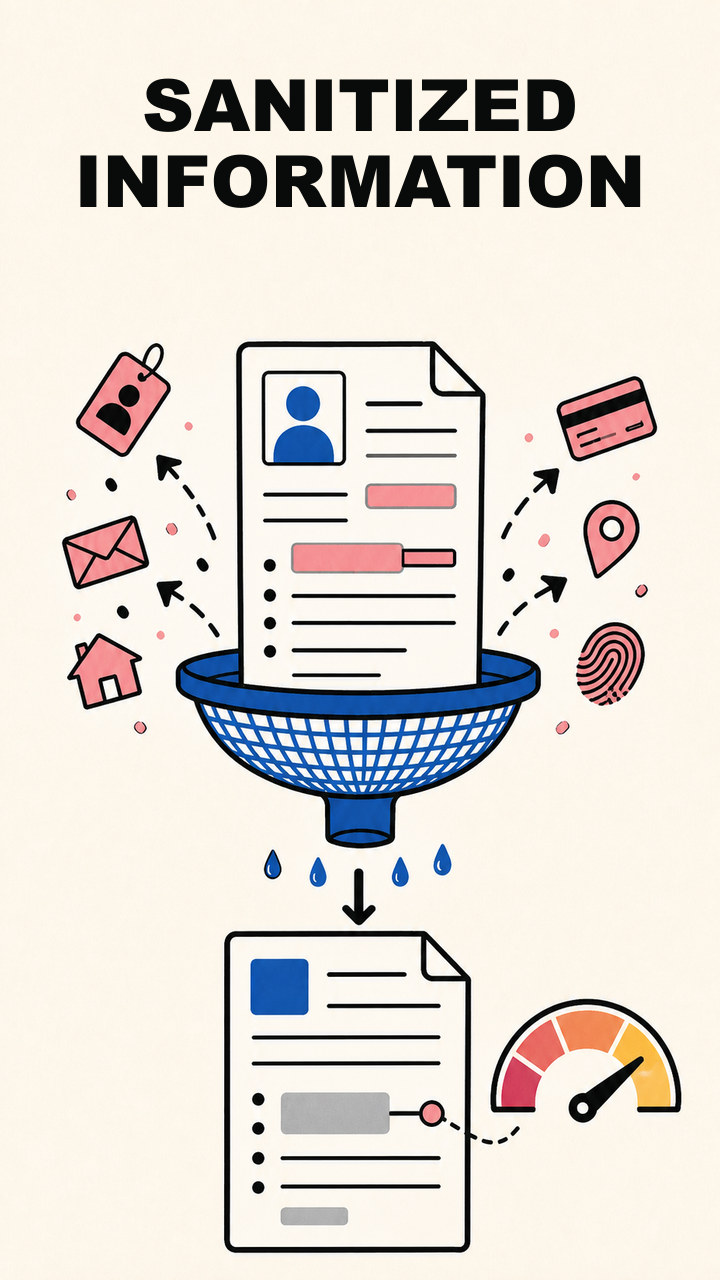
Sanitized information has been changed to remove or replace identifying, confidential, sensitive, or unnecessary details before it is shared.
Sanitization can reduce risk, but it does not automatically make information anonymous, authorized, or safe.
- Review state
- Reviewed in POC
- Freshness
- Current
- Version
- 2
Also called
- sanitized-information
Remember it this wayKeep the pattern; remove the person.
In plain language
Keep the structure needed for the task, but replace real names, identifiers, dates, locations, and private details with fictional or generalized information.
Why it matters
Learners often need realistic examples without exposing real people or organizations.
A sanitized example preserves the learning need while removing details that do not belong in the tool.
Example
Replace a real client name, account number, location, and exact dates with fictional values before using a scenario for training.
Common misconception
Removing a name does not necessarily make information safe. Other details can identify a person or organization when they are distinctive or combined with outside information.
Related terms
Sources
- NIST IR 8053, "De-Identification of Personal Information"de-identification methods, privacy-risk reduction, and the possibility of re-identification.
- NIST SP 800-122, "Guide to Protecting the Confidentiality of Personally Identifiable Information"identifying PII and selecting safeguards based on confidentiality impact.