Concept dictionary
Data Provenance
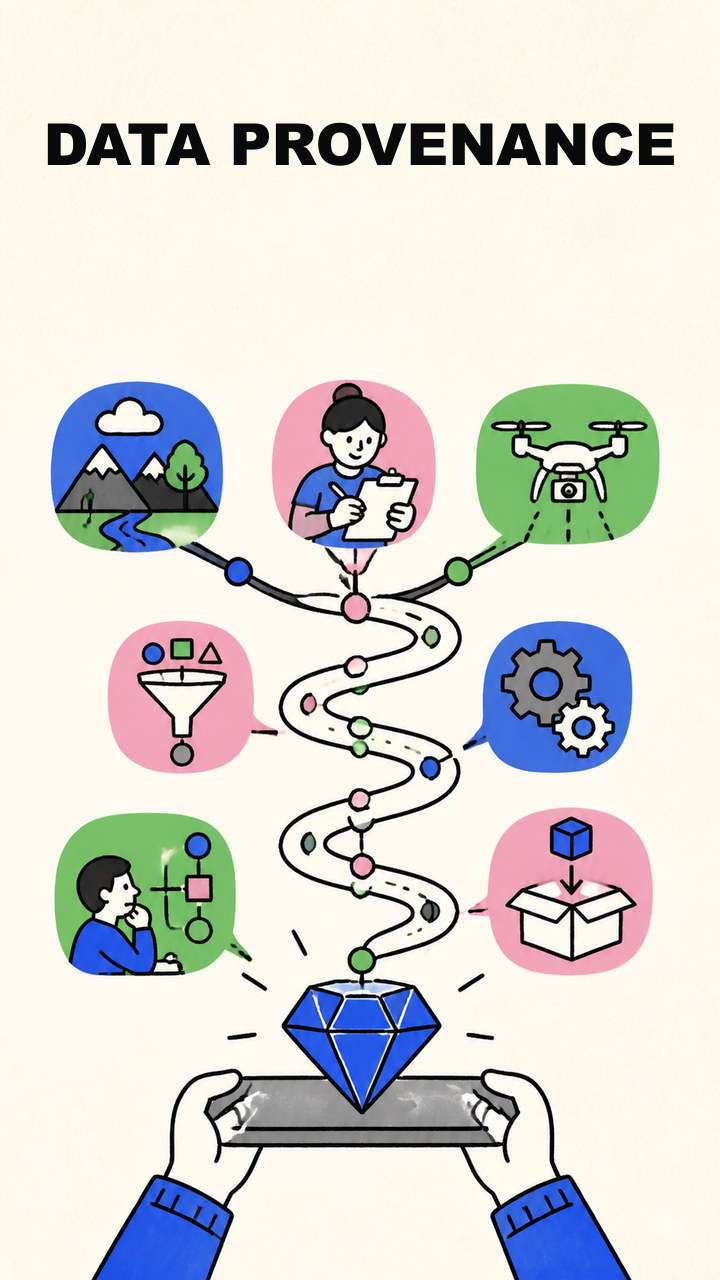
Data provenance is documented evidence of where data or content came from, how it was collected or created, and which material transformations, transfers, or decisions shaped its current form.
- Review state
- Reviewed in POC
- Freshness
- Current
- Version
- 2
Also called
- Data Provenance
- Provenance
Remember it this wayProvenance tells the story of how the data got here.
In plain language
Provenance is the history that travels with information. It helps a reviewer trace the source, custody, edits, generation steps, and other changes rather than treating the current file as context-free.
Why it matters
Without lineage, teams cannot reliably evaluate authority, consent, licensing, freshness, integrity, privacy, or whether human and synthetic material have been mixed.
Example
A training dataset records the original repositories, license terms, collection dates, filtering steps, generated additions, and each version used in a model run.
Common misconception
Provenance does not prove that data is accurate, lawful, or appropriate. It provides evidence needed to evaluate those questions.
Related terms
Sources
- W3C, PROV-O: The PROV Ontologyweb standard for representing provenance information about entities, activities, and agents.
- NIST AI 100-1, Artificial Intelligence Risk Management FrameworkAI governance guidance emphasizing documentation, traceability, and data provenance.
Learn more
- Contrast the lineage of information with the broader contributors captured by [[capability-provenance|Capability Provenance]].