Article Detail
Secrecy Protects the Guilty, Not the Survivors
Why Epstein’s Files Must See the Light
---
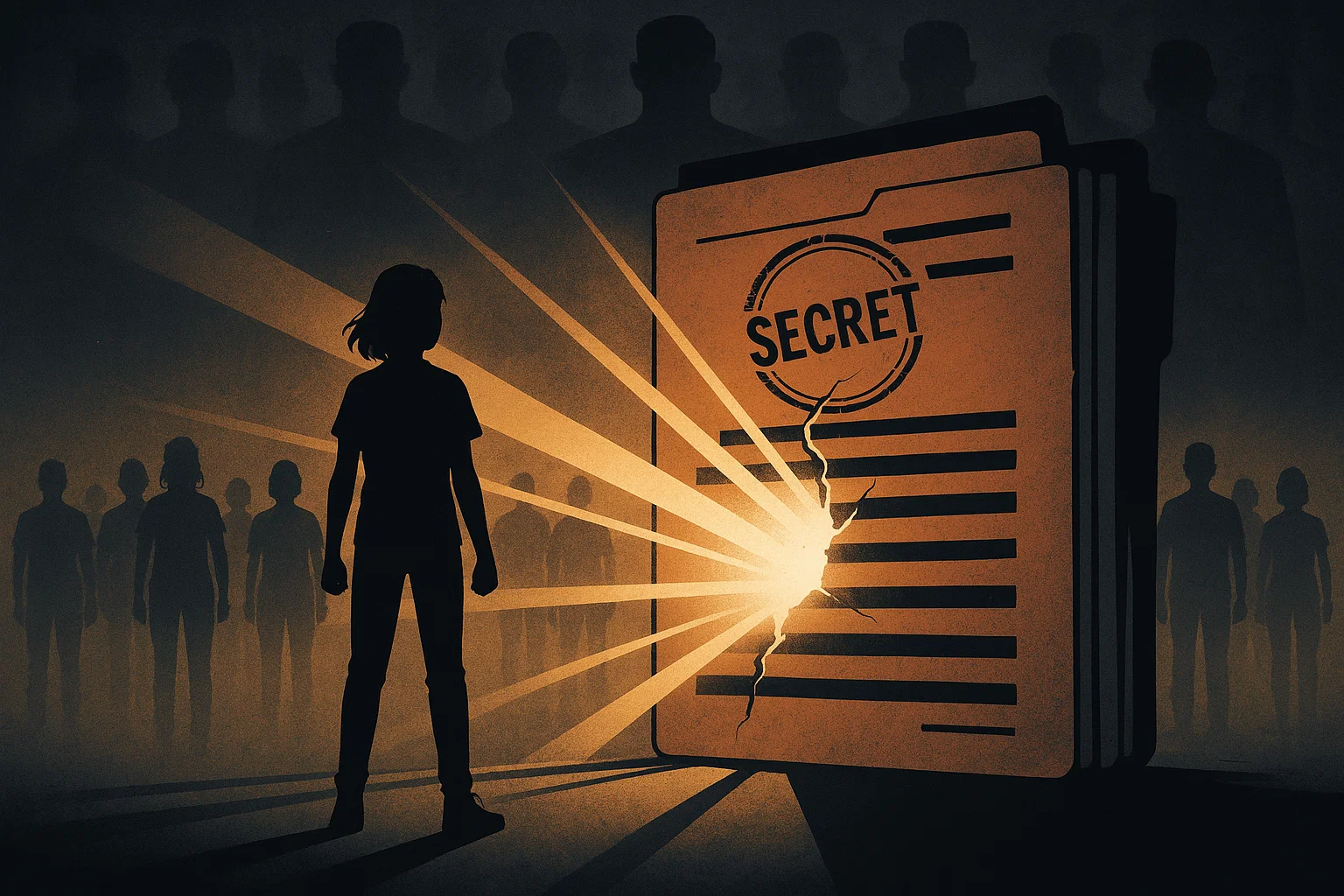
Opening Hook
Every society has its moral stress tests. Ours is simple: will we allow known predators to keep hunting children under the cover of “protecting” those they have already harmed? That is not protection. That is complicity.
---
The False Shield of Silence
For decades, institutions claimed secrecy was necessary to protect survivors. In reality, secrecy shielded perpetrators. From the Catholic Church scandals to Larry Nassar to Jeffrey Epstein, the pattern is the same: cover-ups create more victims. Silence does not protect; it multiplies harm.
---
The Hard Arithmetic of Abuse
The grim math is undeniable. Each hidden predator becomes a breeding ground for dozens of future victims. And some victims, irreparably damaged, tragically repeat the cycle. By muzzling the truth, we are not only failing existing survivors, we are ensuring new ones. It’s like refusing to treat an infection because surgery might leave a scar.
---
Survivors Are Asking for Sunlight
This is not hypothetical. Epstein survivors themselves are testifying before Congress. They are not asking us to hide the truth—they are demanding it be exposed, with their privacy respected where needed. They are showing more courage than most politicians and the people that voted them into office. If we keep voting for those who protect pedophiles, what does that say about us?
---
The Political Smokescreen
When leaders claim they are withholding files to “protect victims,” we must ask: who really benefits? Look at the last decade. Too often, the loudest voices promising “protection” are the same ones blaming victims, discrediting them, and fighting reforms that would make reporting safer. To entrust survivors’ futures to people with that record is not just bad policy—it is cruelty in disguise.
---
What Real Protection Looks Like
We know how to protect survivors’ privacy. Courts anonymize testimony. Journalists redact identifying details. Special commissions handle evidence with trauma-informed care. What we lack is not capability but willpower.
Real protection means:
- Releasing names of perpetrators and enablers, not survivors.
- Using independent panels to manage redactions.
- Funding survivor support: therapy, relocation, legal aid.
- Enforcing laws against retaliation and doxxing.
---
The Greater Good
There is no neutral ground here. Either secrecy shelters predators or sunlight shields children. To delay disclosure is to guarantee more victims. The so-called “balance” between truth and privacy is an illusion—because survivors are already speaking, and silence protects only the guilty.
---
Closing Hammer
The test before us is stark: do we side with predators cloaked in power, or with survivors who have already endured more than enough? History is watching, and history is unforgiving.
The files must be released. Anything less is collaboration.
---
Generative AI Shows the Same Struggle With Truth
I thought that this would be an easy article to write while I am recovering from eye surgery. Use some assistive technology and do some research with my trusted chatbot. But ChatGPT 5 no longer just goes along with what ever crazy idea that I come up with. My chatbot will challenge me with the precedents and biases that exist in its training. This is a welcome improvement with a bit of a downside.
Unfortunately, the status quo is baked into our history. The same history that taught our chatbots. What does this mean in practice? I got at least 5 talking points that churches, sports leagues, politicians, and Hollywood use to protect themselves. It reminded me that just like institutions, even AI trained on history can end up echoing excuses that keep predators in the dark. **I had to convince my chatbot that the best way to protect victims is to stop creating them.
The above editorial is the result. I realize that these arguments will not work with the predators. I hope these arguments are enough for those that elect them and their enablers.
Because whether we’re confronting predators or algorithms, truth doesn’t surface on its own—we have to drag it into the light.