Article Detail
AI as Flammable Cladding
Why Bolted-On Adoption Creates Systemic Risk
The Problem
Enterprises are rushing to bolt generative AI onto their operations. The pitch is speed, efficiency, and optics: a slick demo of AI writing code or drafting content becomes the justification for adoption. But as engineers know, bolting a new material onto an existing structure without due diligence often creates vulnerabilities that can destabilize critical systems.
Lessons from Construction
Before we talk about AI, it helps to look back at moments in building history when rushing to adopt new materials or methods without proper testing led to tragedy. These cases—spanning more than a century—show how shortcuts in safety and due diligence create systemic vulnerabilities.
---
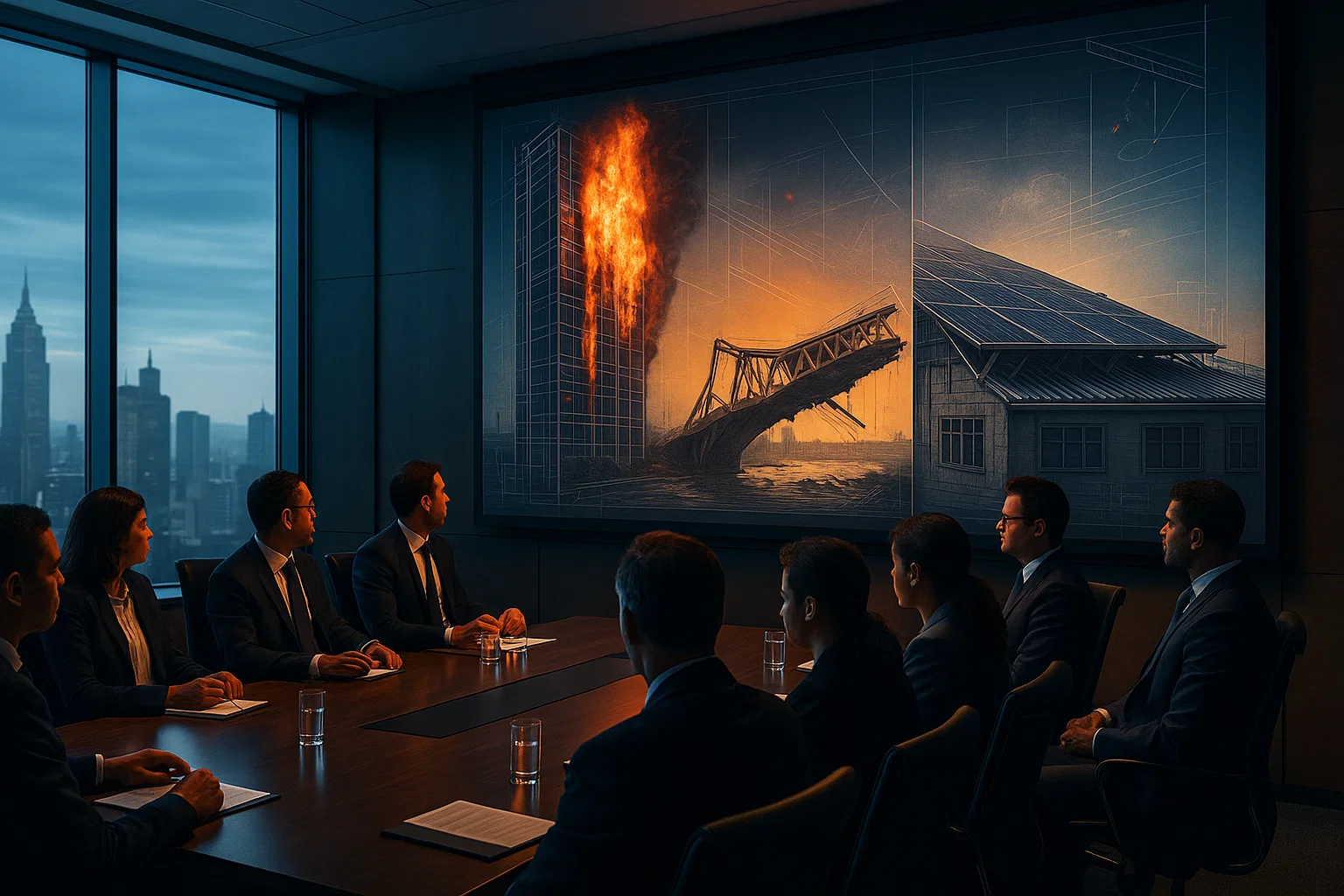
Quebec Bridge Collapse (1907): A landmark steel bridge project pushed the limits of design without adequate load testing. Underestimated weight led to a catastrophic failure mid-construction, killing 75 workers.
AI Parallel: Ambitious deployments of AI without rigorous validation can collapse under their own weight, causing human and financial casualties.
---
Boston Cocoanut Grove Fire (1942): A nightclub packed with modernized decor used flammable materials and lacked adequate exits. When fire broke out, nearly 500 people died due to design shortcuts and poor safety integration.
AI Parallel: Adding flashy AI interfaces without embedding governance and fail-safes creates systems that look inviting but trap users when failures occur.
---
Flammable Cladding (Grenfell Tower, 2017): Aluminum composite panels were installed to improve aesthetics and efficiency. Fire modeling wasn’t revisited. The result was catastrophic: flames spread up the facade in minutes, killing 72 people.
AI Parallel: GenAI is installed for efficiency and optics without revisiting the resilience model. Once introduced, errors can propagate across systems faster than legacy controls can respond.
---
Unvetted Solar Panels: Early rooftop installations skipped structural load analysis and wiring standards. Roofs sagged, fires started, insurers balked. The push to “go green” ignored whether the structures could carry the load.
AI Parallel: AI copilots are layered onto brittle processes never designed for probabilistic systems. Without governance, auditing, and validation, the added weight leads to collapse.
---
The Engineering View
In construction and property, no responsible engineer would:
- Install cladding without fire modeling.
- Mount panels without load tests.
- Approve occupancy without code inspection.
Yet in AI, governments and industries are rewarding those who deploy first and patch later. That is equivalent to filling a high-rise with residents and hoping the fire doors work—without ever bothering to test whether those doors actually close or hold back a fire.
What We Want Our Stakeholders To Know
- Foundation First: AI should start with testing, governance, and resilience modeling—the soil testing and fire modeling of the digital era.
- Integration, Not Retrofit: Safe adoption means AI is built into the design of workflows, with controls and kill-switches, not bolted on as afterthoughts.
- Risk Symmetry: Just as insurers refused coverage for flammable cladding once risks were known, regulators and insurers will eventually refuse to underwrite firms that deploy unvetted AI in critical operations.
The Bottom Line
Bolted-on AI may look sleek, but it creates systemic vulnerabilities that spread faster than anyone anticipates. Stakeholders should insist on visible testing and auditing before approving AI initiatives. Advisors must push leadership toward foundation-first adoption: build for resilience before speed. Otherwise, the enterprise risks trading short-term optics for long-term catastrophe.
#SafetyScales #ShortcutsFail