Commentary
Field Guide to Surviving Clickbait
A set of habits for keeping your attention and judgment when a headline wants both.
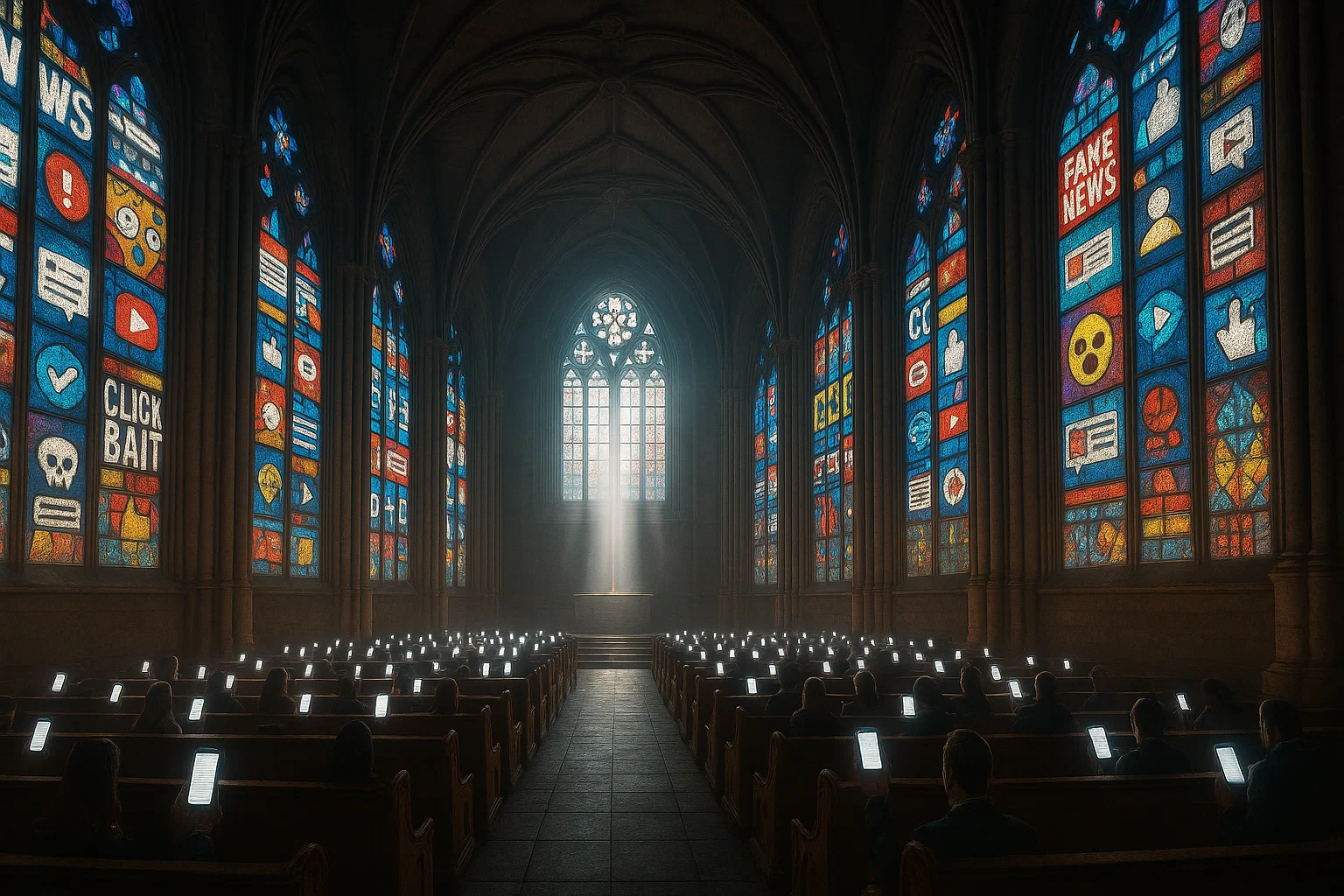
The spark
In an October 2025 address to international news agencies, Pope Leo XIV warned against manipulation and called for a free, independent, objective press. The reporting included his criticism of clickbait. (Associated Press)
I did not need the Pope to tell me that bad information exists. What caught me was the question underneath it: what do I do with the part of my attention that a headline can grab before I have had time to think?
Until recently, I thought I was handling that well. I read, compared sources, and checked links. Then I noticed something uncomfortable. I was not drowning in facts; I was getting pulled around by anger. Some of the things I read were designed to provoke me, and I was taking the bait.
I asked Zai, my ChatGPT, for a way to respond. Its first answer was grand: save the world. I do not have that kind of power. I wanted a field guide instead: practices for protecting my own attention and being a better neighbor in the conversations I do join.
This is that guide. It is not a promise that every claim can be settled from a phone screen. It is a way to slow down before I help a bad claim travel farther.
1. Notice the hook
When a post makes me angry, frightened, or triumphant before I know what it says, I treat that feeling as a cue to pause. Feeling strongly does not prove that a claim is false. It does mean that I am more likely to react before I check it.
The pause is small, but useful: I ask myself what the headline is asking me to do. Click? Share? Join a pile-on? Buy something? A clear answer does not settle the claim, but it makes the incentive visible.
2. Find the original claim
Screenshots, clipped video, and anonymous posts can be leads. They are not enough on their own.
Before repeating one, I look for the original speech, document, full video, named witness, or reporting that says where the information came from. If I cannot trace it, I can still be curious, but I do not need to pass it along as fact. UNESCO’s media-literacy guidance similarly treats verification and understanding sources as practical civic skills, not as a specialized hobby. (UNESCO guide)
3. Give breaking news room to develop
The first account of a fast-moving event is often incomplete. I do not use a fixed 24-hour rule; some claims are clarified quickly, while others take longer. The habit is simply to distinguish what is known now from what people are guessing now.
If a claim matters enough to make me angry, it matters enough to revisit after more reporting or primary material is available.
4. Compare reporting, not teams
It helps to read more than one account. But counting outlets from opposing political camps is not a test of truth. A better question is whether independent reporting points to the same records, direct evidence, or accountable sources.
I also try to separate reporting from commentary. Commentary can help me understand why a fact matters. It should not be the only evidence that the fact occurred.
5. Learn a few common warning signs
Some patterns deserve extra scrutiny:
- a quote with no full transcript, source, or date;
- an image or video presented without its original context;
- an unnamed local anecdote offered as proof of a broad event;
- a demand to share immediately before “they take it down”;
- a claim that all credible people are hiding the same obvious truth.
None of these automatically proves deception. Together, they are a reason to slow down and look for better evidence.
6. Protect empathy without surrendering judgment
Behind a bad claim there may be fear, grief, or a real experience interpreted too broadly. I can acknowledge that without treating an unverified post as proof. Curiosity helps me avoid contempt; verification keeps curiosity from becoming gullibility.
That is especially important with people I know. A private correction, a question about the source, or a choice not to amplify a post often does more good than a public performance of being right.
7. Make the habit shareable
Children, elders, and everyone between them deserve practical help, not condescension. We can show one another how to inspect a URL, search for the original reporting, use a reverse-image search, and recognize satire as satire.
The goal is not to turn family members into professional fact-checkers. It is to make “Where did this come from?” an ordinary question.
A modest standard
I will still make mistakes. I will still encounter claims I cannot verify. The standard is not omniscience; it is refusing to lend my attention and my name to something I have not tried to understand.
When I pause, find the source, and wait before sharing, I am not saving the information ecosystem by myself. I am doing the smaller work I can actually do: keeping one more conversation a little closer to reality.